Fast-track Your PharmD
Join our prepharmacy program and earn a Samford PharmD in as little as six years.
3rd
Top-Ranked Private School of Pharmacy in the South —U.S. News & World Report (2026)
92%
MPJE First-Time Pass Rate (5-Year Average); Higher than National Average (80%)
#2
In the Nation for
Student Character Development
—Wall Street Journal (2025)
Student Character Development
—Wall Street Journal (2025)
#3
In the Nation for Career Preparation
—Wall Street Journal (2026)
—Wall Street Journal (2026)
What Makes Us Different?

McWhorter School of Pharmacy is distinctive in its mission to prepare students in a Christian environment to be exemplary pharmacists. As a graduate from our school, you will be more than prepared to address the complex challenges facing health care today wherever you are called to serve.
Joint Degrees
Personalize your PharmD and align your education more closely with your career aspirations. Make your degree go further by combining your knowledge of pharmacy with an expertise in business, public health, nutrition, health informatics or law. Joint Degrees
International Opportunities
Because advances in pharmaceutical science impact people on a global scale, we give students a number of opportunities to experience the industry from an international perspective. We have formal affiliations with academic institutions or hospitals in 12 countries on five continents where you can pursue study abroad and other opportunities. International Experiences
Pharmacy Practice Experiences
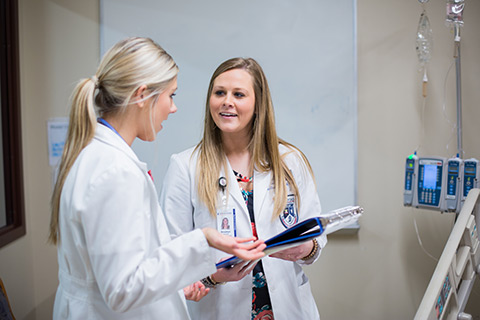
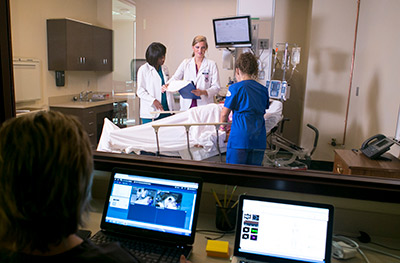
We believe there is no substitute for hands-on experience, so we supplement your classroom education with extensive experiences in a variety of practice settings. Students complete 1,600 hours of clinical work in their fourth year, and this can be personalized to align with your career goals. Practice Experiences
Student Research
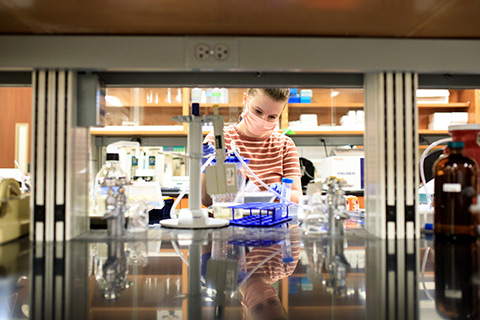
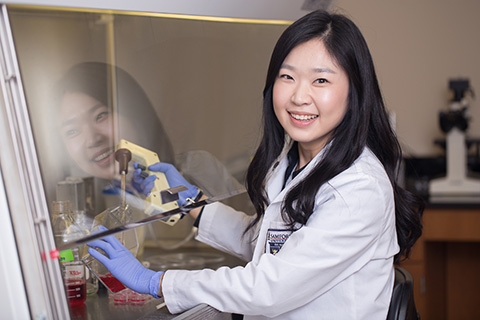
Research brings an important dimension to your classroom experience, giving greater depth and context to all that you learn. There are multiple opportunities for students to become actively involved in research, including research electives as part of the curriculum course requirement, participating in our summer research internship program and completing your Capstone senior research project. Student Research

A Community Like No Other
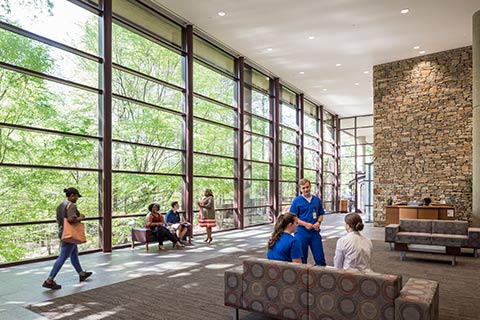
At McWhorter School of Pharmacy, you will find professors who guide and mentor, classmates who become lifelong friends and a network of alumni to connect with throughout your career.
McWhorter School of Pharmacy is a place where your accomplishments are celebrated, and your faith is fostered. We are committed to your success, knowing that on the other side of every one of our graduates is ultimately the patients you’ll serve.