


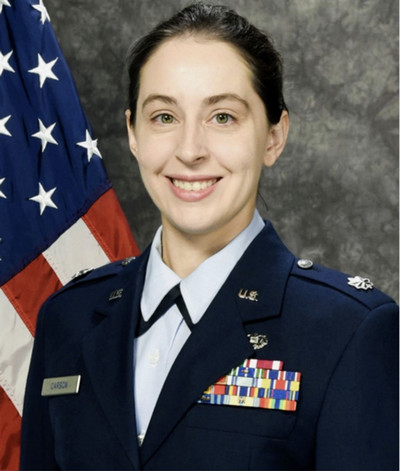
The debate over the 2001 Authorization for Use of Military Force (AUMF) continues to shape U.S. foreign policy nearly 25 years after its passage. Scholarship by Carlissa Carson, assistant professor of law at Samford University’s Cumberland School of Law, remains an important part of that conversation.
Most recently, her article “Restoring the Balance of War Powers: A Call to Repeal and Replace the 2001 AUMF,” published in the San Diego Law Review, was cited by the Arab Center in Washington, D.C., in its analysis of how presidential war powers have expanded across administrations.
Her work has also been cited by the Journal of International and Area Studies, published in Seoul, Korea, in an article titled “From Means to End: Efficiency and the Quest for Legitimacy in the U.S. Military and Civilian Terrorism Trials,” and in a Boston College Law Review article titled “Mutual Defense Treaties and Presidential War Powers.”
At Cumberland School of Law, Carson teaches military justice courses. Additionally, she is a lieutenant colonel in the U.S. Air Force (Air National Guard) and serves as the staff judge advocate for the 117th Air Refueling Wing in Birmingham, Alabama.
The views expressed are Carson’s own, not those of Samford University, the federal government, the military or the Department of Defense.
