


When Samford University Cumberland School of Law student Sarah White accepted a summer internship through Pepperdine University's Sudreau Global Justice Institute, she expected to spend her summer working with the Supreme Court of Uganda.
Instead, three days before she was scheduled to begin, everything changed.
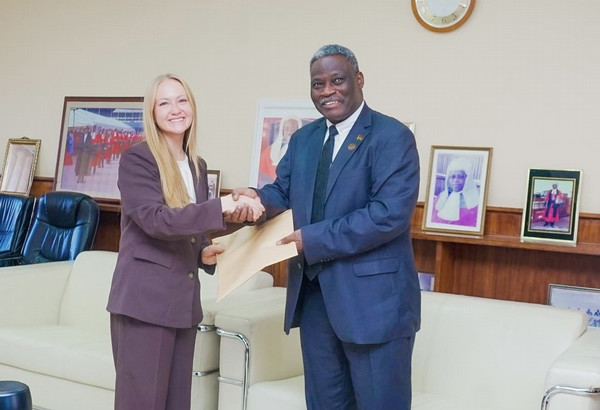
An Ebola outbreak in Uganda forced the program to relocate its cohort of eight law students. Thanks to the institute's relationships throughout Africa, the Supreme Court of Malawi stepped in to host the interns, sending White on an unexpected journey that would reshape her understanding of justice, legal service and the human impact of the law.
"I arrived with very little knowledge or expectations about the country's legal system or culture," White said. "I just had to show up and learn it all as I went."
 For the next several weeks, White worked as a clerk for Malawi's Supreme Court of Appeal, the nation's highest appellate court. Her responsibilities mirrored those of an appellate clerk in the United States, including conducting legal research, preparing bench memoranda, drafting opinions and observing court proceedings.
The work provided an opportunity to see firsthand how a legal system operating thousands of miles away shared many of the same foundations she had studied at Cumberland.
"The biggest similarity is that both the U.S. and Malawi are deeply rooted in the common law system," White said. "The way we analyzed issues and applied precedents felt very familiar. The foundational legal reasoning was exactly what I had been trained in while working and attending school in the U.S."
Throughout the summer, White worked on a broad range of criminal and civil matters, drawing on knowledge from across Cumberland's curriculum.
"Because the Supreme Court of Appeal is the highest appellate court in Malawi, I worked on a wide variety of cases, utilizing everything I learned from Criminal Law to Business Organizations," she said.
She credits courses such as International Business Transactions with Professor Paul Kuruk and Contracts with Professor Layne Keele for helping prepare her for a complex international contract dispute she worked on during her clerkship.
While the similarities between the two legal systems were striking, White was equally impacted by what differed.
"My time in Malawi made me realize how much we take our developed procedural infrastructure for granted in the United States," she said. "However, it also showed me that a lack of modernized tools does not diminish the pursuit of justice."
She found herself inspired by the dedication of the judges, clerks and legal professionals she encountered.
"The justices and clerks I worked alongside possessed an inspiring work ethic and a deep, careful respect for the law," she said.
Yet it was a week spent inside Malawi's maximum-security prison that left the deepest impression.
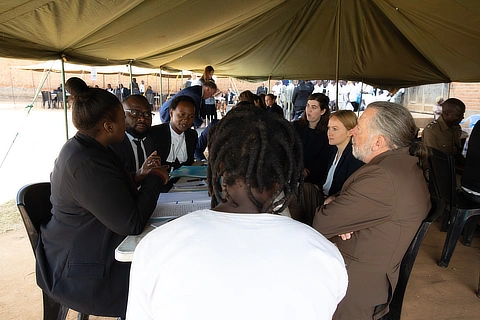
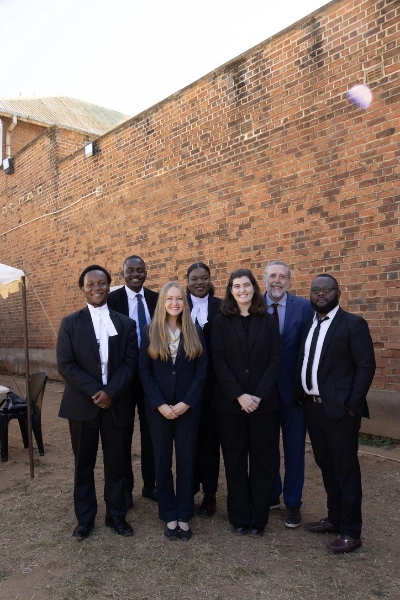 Through the Sudreau Global Justice Institute's Prison Project, White joined local and international attorneys and students working alongside the Malawian judiciary to address court backlogs and prison overcrowding through a plea-bargaining initiative.
The project seeks to provide timely resolutions for individuals who have spent years awaiting trial because of limited judicial resources.
"My first client during the project had been on remand for 15 years," White said.
Working inside the prison, White's team reviewed case files, met with incarcerated individuals to explain legal options and helped facilitate plea negotiations. Once agreements were reached, judges conducted proceedings within the prison to formally resolve the cases.
The experience offered White a perspective on justice she had never encountered in a classroom.
"Working on this project provided a clear view of the ground-level realities of criminal law," she said. "It was a privilege to work alongside local legal professionals who are actively expanding access to justice in their legal system."
For White, the work reinforced a simple but profound truth: the law is ultimately about people.
"Recognizing the humanity of the accused means acknowledging their fundamental right to a timely legal process," she said. "Meeting with individuals who had been waiting for a resolution reminded me that circumstance does not change a person's inherent worth. They are exactly as deserving of justice as anyone else."
The Prison Project became the most rewarding part of her summer and fundamentally changed how she thinks about both justice and her future legal career.
"I have never been part of anything that felt so intentionally structured to create immediate, tangible results," White said. "Assisting with a plea-bargaining process that directly and efficiently resolves cases fundamentally changed my perspective on justice and my understanding of basic human rights."
The experience also reinforced the value of opportunities that expose law students to legal systems and cultures beyond their own.
"I think these opportunities are important because they anchor a legal education in human impact," White said. "It is easy to get caught up in exams and competitive career tracks during law school. Engaging in clinical work serves as a strong reminder that the law is primarily a tool to protect human dignity."
As she looks toward her future career, White says the lessons of Malawi will remain central to how she approaches the profession.
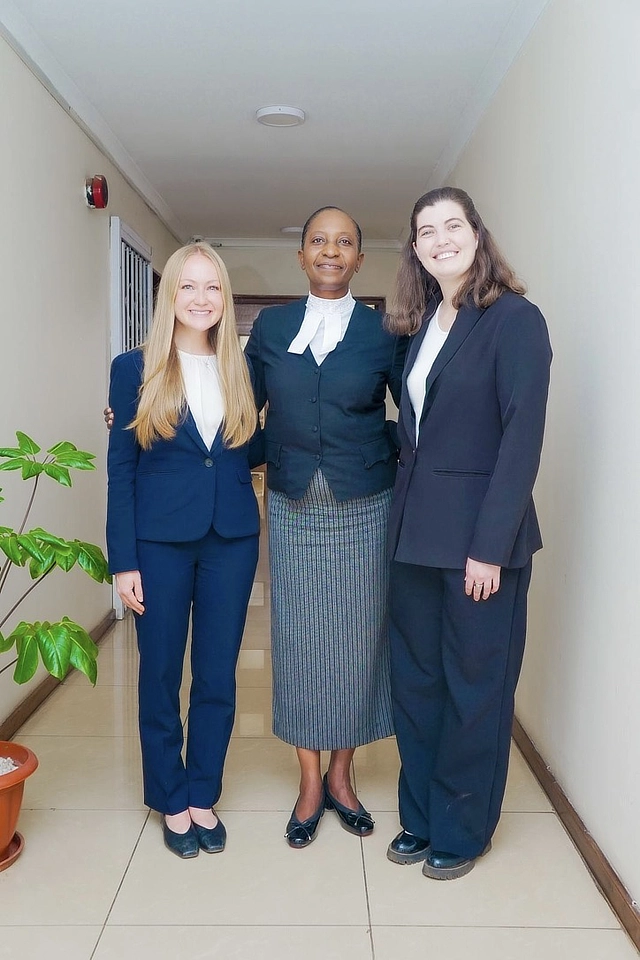 "This experience shifted my focus entirely toward the human element of our profession," she said. "When you strip away the distractions and focus on the actual people involved, the work becomes incredibly meaningful. That is the perspective I hope to carry with me."
For White, a summer that began with an unexpected change of destination ended with a deeper understanding of justice itself, one shaped not only by studying appellate law at the highest levels of a nation's judiciary, but by witnessing firsthand the difference legal systems can make in the lives of ordinary people.
