Register
Share on:

Course Description
This one-hour presentation provides speech-language pathologists with simple, everyday tools for evaluating clients from diverse backgrounds. We will explore how hidden cultural values and beliefs affect communication, review practical ways to tell the difference between a natural language difference and a true language disorder, and review best practices for collaborating with interpreters during assessments and intervention.
Learning Objectives
Participants will be able to:
- Identify visible vs. hidden cultural factors that influence a client's communication and engagement in assessments and intervention.
- Recognize key second-language patterns to accurately distinguish a natural language difference from a true language disorder.
- Apply the 3-step BID process (Briefing, Interaction, Debriefing) to collaborate effectively with bilingual interpreters.
Agenda
12:00 – 12:15 Cultural Responsiveness & the Iceberg
12:15 – 12:35 Differentiating Difference vs. Disorder
12:35 – 12:55 Working with Interpreters & the BID Model
12:55 – 1:00 Q&A and Wrap-Up
Speaker Bio
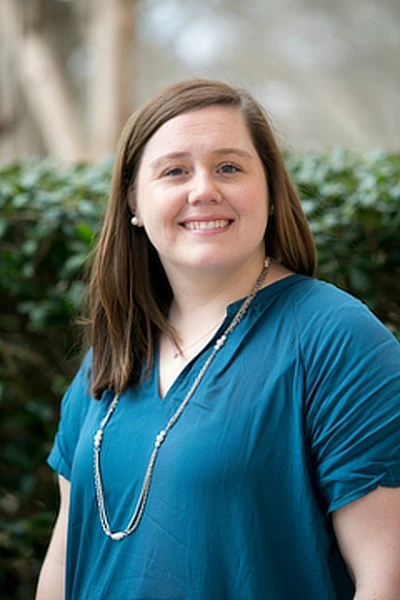 Kelly Jackson joined the Communication Sciences and Disorders department in 2017. She received her BA in Communicative Disorders and Spanish and her MS in Speech-Language Pathology from the University of Alabama, and her PhD in Health Sciences from Northern Illinois University. Her clinical experience includes work with both pediatric and adult clients with a variety of speech, language, and swallowing disorders. Kelly’s primary areas of interest include bilingual language development and service delivery, interprofessional and collaborative practice/education, clinical education, and neurogenic communication disorders.
Disclosure: Dr. Kelly Jackson receives a salary from Samford University where she is an assistant professor.