


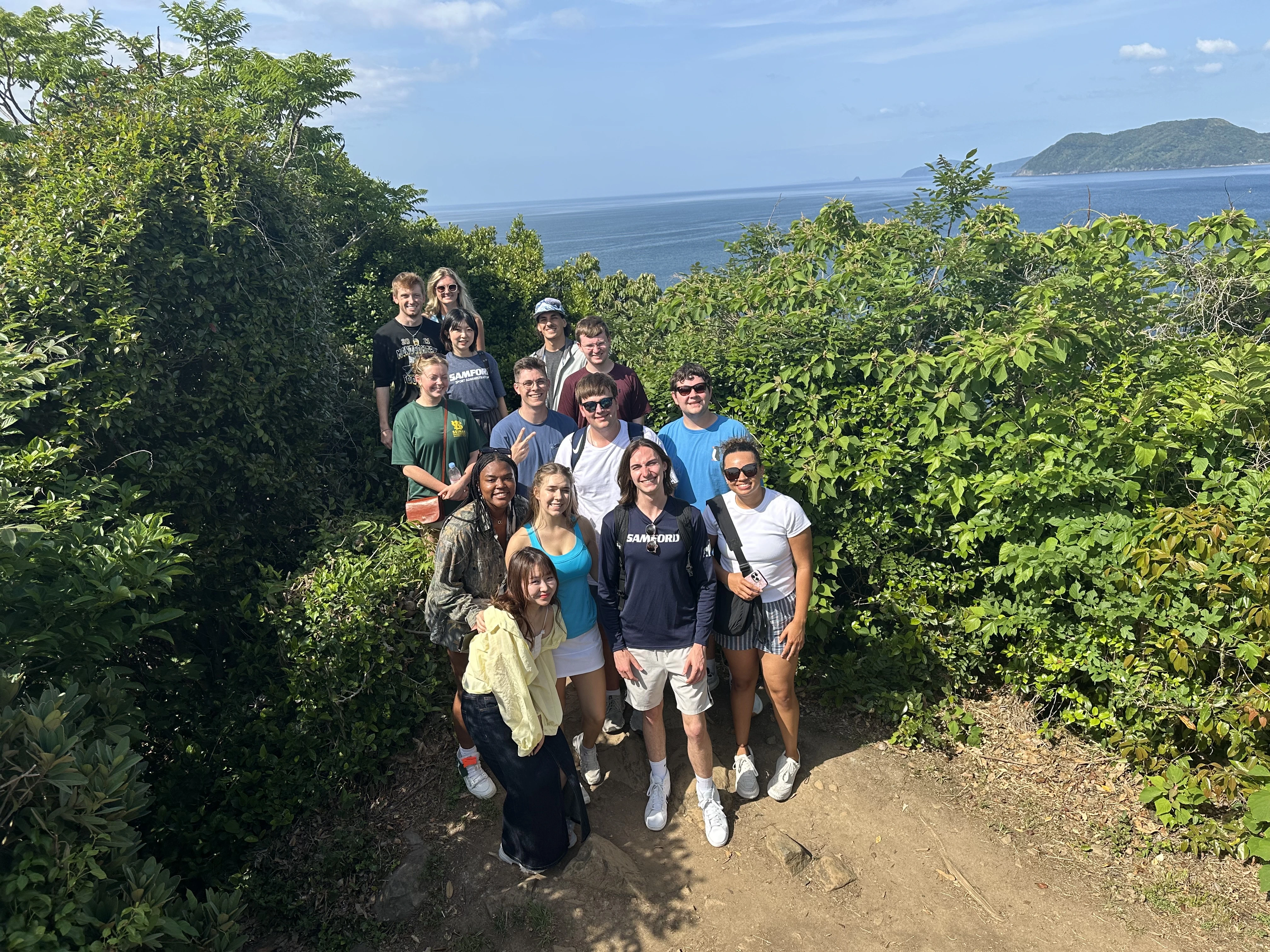
Samford University students traveled to Japan this summer for the Japanese Culture Through Sport course, the second iteration of the sport‑culture study abroad model.
Led by Patrick Marsh, assistant professor in the School of Health Professions Department of Kinesiology, the program combines academic study of sport with intentional cultural immersion across Tokyo, Hiroshima and Fukuoka.
The course was developed in partnership with Samford Global, which expands international opportunities for students through faculty‑led programs, global internships and exchange partnerships. The first program, British Culture Through Sport, took place in 2022 at the Daniel House in London.
"After the first British culture class, we began considering the next location,” Marsh said. “Once we learned about the history of San‑in Gakuin University and met their faculty, Japan quickly became a reality.”

Students began their experience in Tokyo, visiting historic sites, attending sporting events, including a visit to a sumo tournament and a baseball game, and learning how sport connects to everyday life in Japan. They then traveled to Hiroshima to visit the Peace Memorial Park, a sobering and meaningful stop guided by a local whose family survived the World War II bombing.
Following the visit to Hiroshima, the group headed to Fukuoka for a week of immersive cultural exchange that deepened the program’s impact.
To help students engage with the local community, Marsh partnered with San‑in Gakuin University’s International Education Office to arrange student interpreters who accompanied the group throughout the week. The interpreters introduced the Samford students to the university’s baseball media team, which produces ESPN‑quality livestreams, and hosted games and cultural exchanges on campus.
“We still did the sport and cultural components—sumo, baseball, Hiroshima, temples, shrines, fish dinner, the Imperial Palace gardens, paper cranes—but the presence of the interpreters made every experience meaningful,” Marsh said.
The program also allowed students to explore Japan’s religious landscape. Through visits to Shinto shrines and Buddhist temples, along with attending a chapel service at San‑in Gakuin University, students observed how faith traditions shape the country’s cultural rhythms.
Although the service was in Japanese, the familiarity of worship was unmistakable, reinforcing shared foundations of Christian community across cultures.
“Our students benefit from seeing the world up close, not from a distance,” Marsh said. “It felt like we were seeing Japan from the inside, not through glass.”
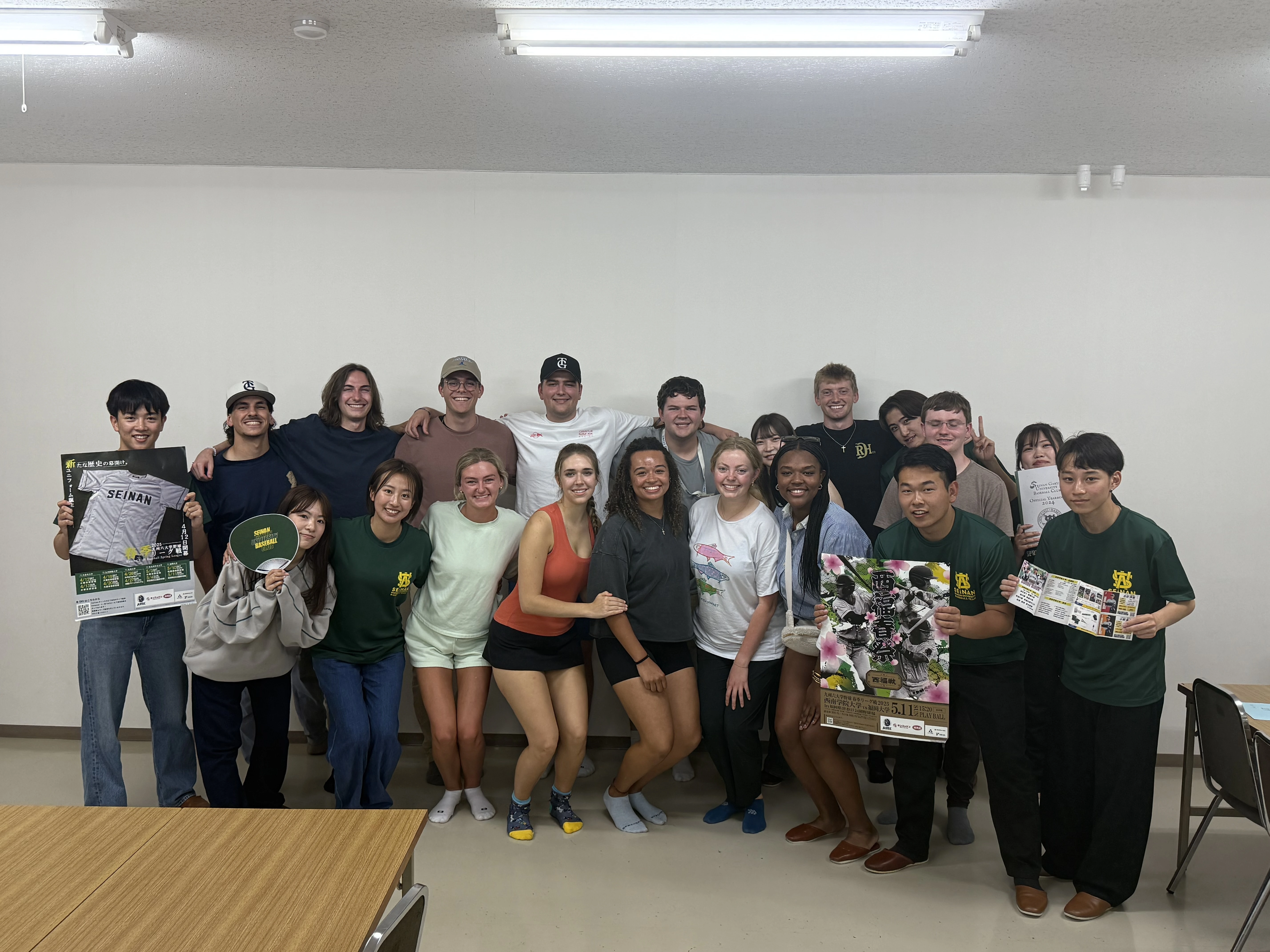
Through Samford Global, the university continues to invest in programs that prepare students to engage the world with curiosity, empathy and cultural understanding. The Japan program demonstrates how travel abroad can expand students’ perspectives, strengthen academic learning and build lifelong friendships.
“It is one thing to study culture,” Marsh said. “It is another to live it alongside people who welcome you as one of their own.”
GIVE: Support international study opportunities like these for future Samford students.
