


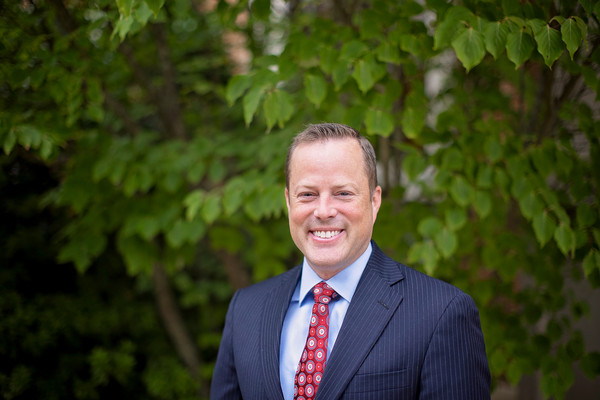
Scholarship by Layne Keele, professor at Samford University’s Cumberland School of Law, is receiving national attention after being cited by the U.S. Supreme Court.
An article by Keele titled “Only Mostly Dead: How the Irreparable Injury Rule Can Protect the Jury Trial Right for Claims in Restitution,” is cited in Sripetch v. Securities and Exchange Commission, a case that raises questions about the scope of remedies in SEC civil enforcement actions.
Keele’s research focuses on the increasingly blurred distinction between claims at law and claims in equity in the American judicial system. Legal remedies often involve monetary damages and usually feature the right to a jury trial. Equitable remedies include injunctions and some kinds of monetary awards, and claims for equitable remedies usually are decided by a judge, not a jury. Recent developments carry significant implications for the Seventh Amendment, which preserves the right to a civil jury trial in suits at law.
Published prior to the Court’s consideration of Sripetch, Keele’s article examines how courts categorize claims in restitution, a complex area of law with both legal and equitable roots. According to Keele, courts have become more likely to treat restitution claims as equitable, which can limit litigants’ access to a jury trial.
The article provides a historical and doctrinal framework to address that issue. Keele traces the evolution of the law-equity distinction in the United States, including the impact of the Federal Rules of Civil Procedure, which merged procedural aspects of law and equity but did not eliminate their constitutional significance. He also analyzes the Seventh Amendment’s role in preserving the jury trial right and explores how courts have interpreted that protection over time.
At the core of Keele’s argument is a call for courts to more carefully distinguish between legal and equitable forms of restitution. The article concludes that courts should ensure that restitutionary relief is truly equitable—and that there is no adequate remedy at law—before denying a jury trial.
The citation of Keele’s scholarship in the Sripetch concurrence underscores the timeliness of the article and the importance of these developing issues. For Cumberland School of Law, the citation represents a notable recognition of faculty scholarship at the highest level of the judiciary.
Keele’s work contributes to a broader academic and legal conversation about the constitutional limits of modern procedural practice and the enduring role of the jury in the American legal system.
