


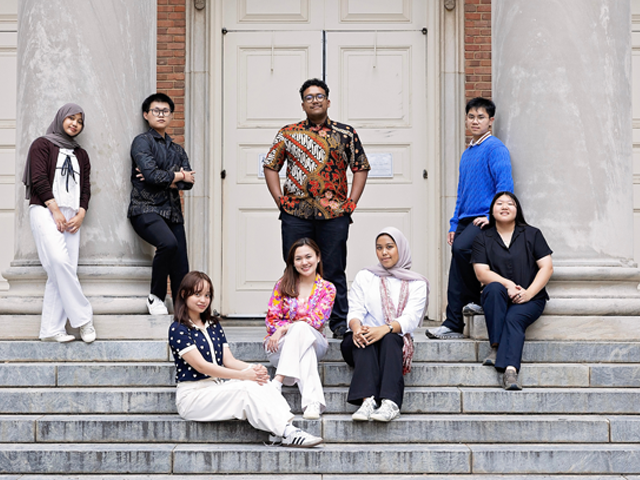
For a group of medical students from Indonesia, this summer’s trip to Alabama offered an opportunity to experience public health far beyond the classroom.
Eight students from Universitas Pelita Harapan (UPH) School of Medicine recently completed the inaugural summer residency component of Samford University’s Master of Public Health (MPH) program, spending three weeks in Alabama exploring public health practice, healthcare systems and community engagement.
The residency represents a significant milestone in the growing partnership between Samford’s School of Public Health and UPH School of Medicine. Through the partnership, students enrolled in UPH’s Bachelor of Medicine Program can earn an MPH alongside their medical degree, preparing them to address health challenges from clinical and population health perspectives.
“Our collaboration with UPH brings diverse international perspectives directly into our classrooms, preparing students to excel in a connected global community,” said Suresh Mathews, dean of Samford’s School of Public Health.
While most coursework is completed online from Indonesia, the residency brings learning to life through hands-on experiences. In the program’s third year, students travel to Samford’s campus for a summer residency built around in-person learning. Students lived together on Samford’s campus and spent their days visiting healthcare organizations, public health agencies and community partners throughout Alabama.
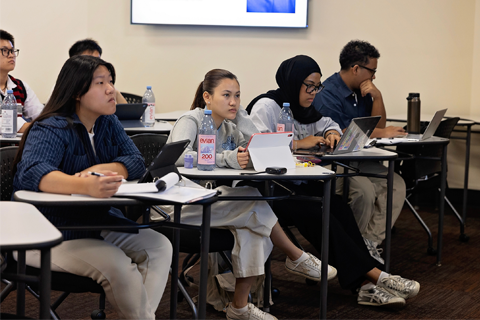 For the first cohort, the three-week residency offered a firsthand look at Samford and how public health is practiced in a different cultural and healthcare setting. Students conducted a windshield survey across the Birmingham metropolitan area, participated in service-learning with Community Kitchens of Birmingham and visited the Jefferson County Department of Health and Christ Health Center. Students also worked with organizations addressing food insecurity, including Grace Klein Ministries and the Food Bank of Central Alabama.
The experience extended beyond academics, allowing students to engage with local culture through visits to a farmers market, a tennis match, an Independence Day fireworks celebration and an indoor gaming facility. In a nod to the American road trip experience, the group also stopped at Buc-ee’s during a supply run.
One of the most impactful aspects of the residency for students was seeing how social determinants of health can influence outcomes in different communities. As they traveled across Alabama, students observed how access to resources, economic factors, education and geography can shape population health.
A visit to Montgomery, including stops at the Alabama Department of Public Health, Equal Justice Initiative and Tuskegee University, helped students connect classroom concepts with the lived experiences of communities across the state. Several students noted the visible differences between communities and how factors such as history, resources and geography can influence health outcomes.
“One of the most important things I learned is that healthcare is shaped by much more than what happens inside the hospital. It is shaped by external factors such as history and policies, as well as social determinants of health like access to care, education level and income,” said Hanifah Angelita, a member of the inaugural UPH cohort.
In their final week, students explored topics including healthcare financing, nutrition and artificial intelligence while completing group projects and preparing capstone presentations that reflected on their experiences throughout the residency.
The program culminated in a graduation ceremony and closing dinner, followed by free days for students to explore Birmingham on their own, including visits to the Birmingham Civil Rights Institute, Vulcan Park & Museum and Birmingham Museum of Art.
Students across the cohort also noted that the residency offered a unique opportunity to experience American food, culture and the U.S. healthcare system.
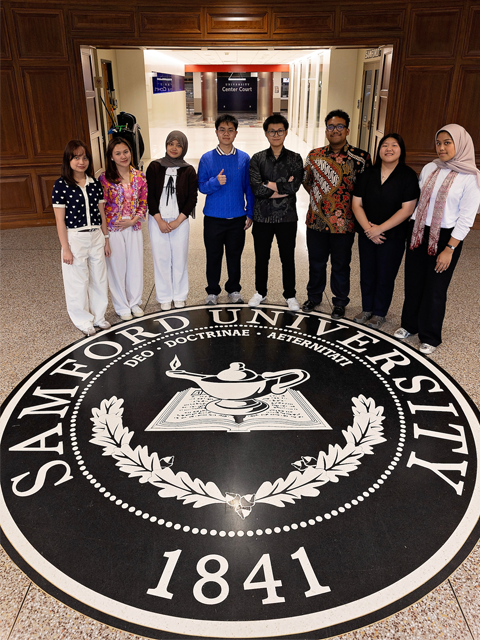 Students spent significant time with Samford faculty, who supported them throughout the program and helped make their experience in Alabama meaningful and unforgettable.
“Integrating international perspectives into the MPH program reinforces the reality that health challenges transcend borders,” said Ahinee Amamoo, interim chair and professor in the Department of Public Health. “Bringing together students from diverse cultures, backgrounds and lived experiences strengthens our ability to identify effective solutions, improve health outcomes and save lives, not only in our local communities but also across the globe.”
