


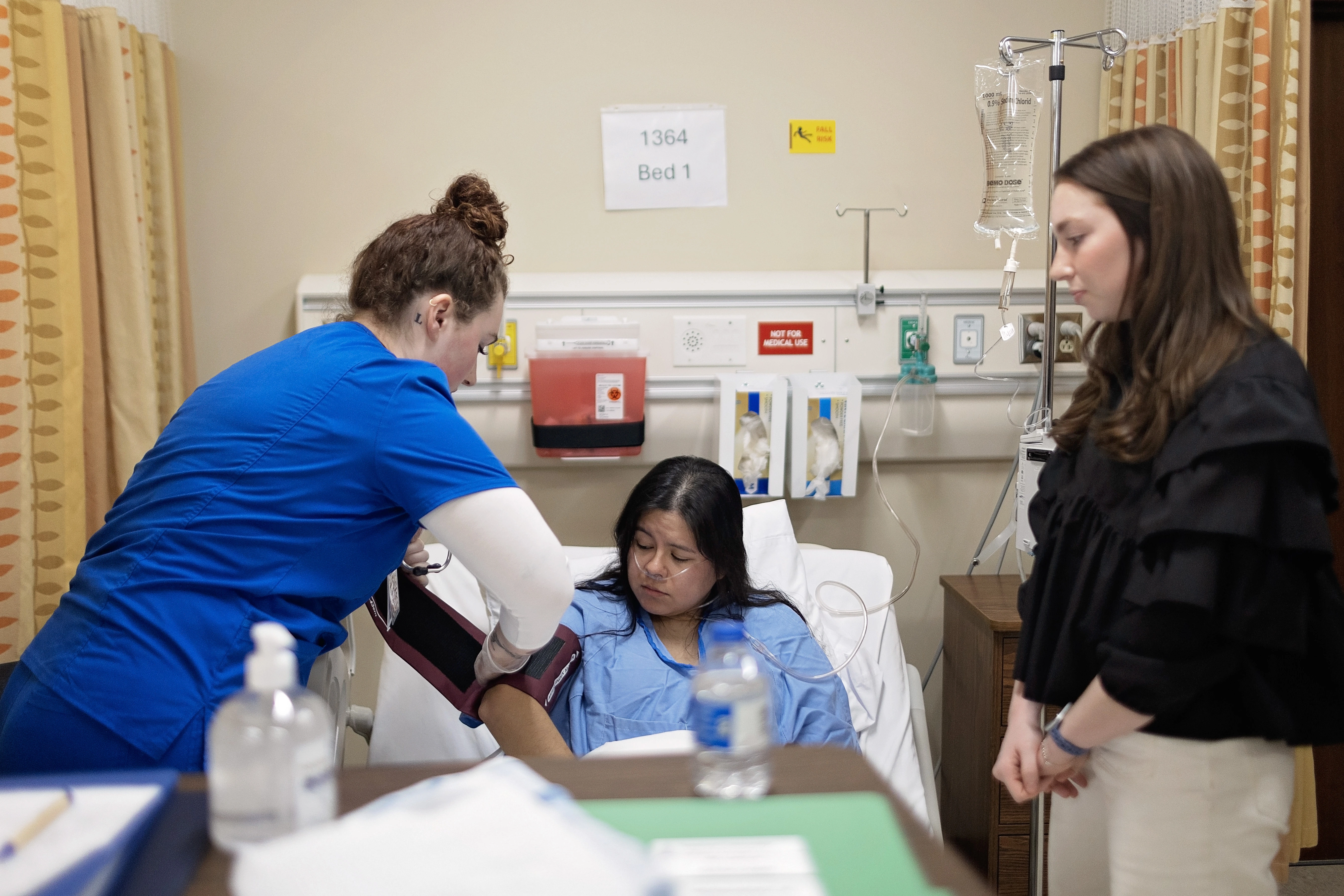
Samford University’s Moffett & Sanders School of Nursing received a $2.97 million federal grant from the Workforce Expansion Program (WEP) within the U.S. Department of Health and Human Services’ Health Resources and Services Administration. The award supports training more registered nurses and preparing them to serve patients in rural and underserved communities.
Stephanie Wynn, DNP, associate dean for scholarly activity and project director for WEP, secured the funding. This marks the sixth grant she has obtained to help address nursing shortages at national and state levels.
Recent findings from the National Sample Survey of Registered Nurses, managed by the HRSA, project a continued shortage of registered nurses through 2036. By that year, the report anticipates a deficit of nearly 338,000 registered nurses — attributed to burnout, retirements and a limited pipeline of new graduates.
“Expanding Alabama’s nursing workforce is essential to preserving access to quality health care, especially in rural and medically underserved areas facing significant nurse shortages,” Wynn said.
To help reverse this trend, WEP focuses on training junior-level baccalaureate nursing students for practice in acute care and long-term care settings, particularly in rural and underserved communities.
The grant provides support for students through expansion of didactic and clinical education, academic–clinical partnerships and retention strategies. It also helps strengthen the pipeline of registered nurses while assisting facilities such as critical access hospitals, nursing homes and home health agencies in filling hard-to-staff positions.
“This expanded training strengthens clinical readiness, critical thinking, communication and transition-to-practice competencies, preparing future nurses to meet the needs of diverse, high-demand populations,” said Megan Mileski, associate professor and WEP project coordinator.
The WEP advisory council selects students who meet program criteria and demonstrate strong potential to thrive in clinical practice. Students admitted to the program commit to completing an additional 200 direct clinical hours.
By increasing clinical hours, providing mentorship and building confidence in care delivery, WEP awardees are positioned to address workforce shortages and improve health outcomes. Their development directly supports the program’s goal of expanding a practice-ready RN workforce committed to serving vulnerable populations.
Through programs like WEP, Moffett & Sanders School of Nursing continues to strengthen the nursing workforce and empower graduates to transform acute and long-term care settings in underserved communities. The goal: a robust nursing workforce, reduced health care disparities and accessible, high-quality care for all.
“Our students embody the curiosity, heart and determination the nursing workforce needs as we prepare the next generation of nurses for meaningful impact,” Mileski said.
The Health Resources and Services Administration (HRSA), Department of Health and Human Services (HHS) provided financial support for this project. The award provided 100% of total costs and totaled $2,971,927. The contents are those of the author. They may not reflect the policies of HRSA, HHS, or the U.S. Government.