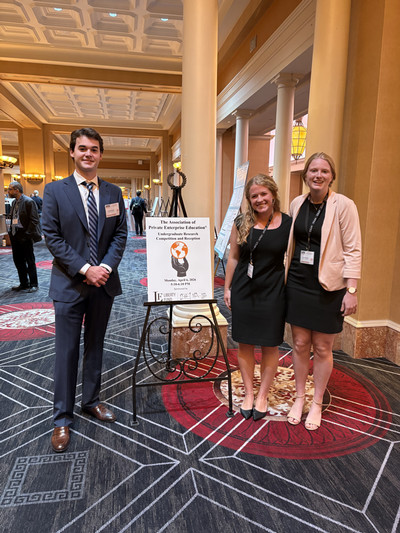
 Three Brock School of Business students represented Samford University on a national stage, April 5–7, at the Association of Private Enterprise Education (APEE) conference in Las Vegas, Nevada. Juniors Jay Clemmer, Anna Lynn Harms and Leah Watson participated in the Undergraduate Research Competition, presenting original research developed in intermediate macroeconomics.
Competing alongside students from across the country, most of whom were seniors presenting capstone projects, Samford students gained early exposure to academic research, professional networking and high-level economic dialogue.
“This is the first time I have taken juniors, and I hope they will continue working on their projects for next year’s conference,” said Art Carden, Margaret Gage Bush Distinguished Professor of Economics. “My colleagues gave me a lot of great feedback about our students’ projects.”
At the conference, students presented research examining the economic forces that shape entrepreneurship, prosperity and long-term growth, with topics ranging from institutional barriers and poverty alleviation to social capital and the lasting impact of historical crises on regional economies.
In addition to presenting, each student engaged in conference sessions, connected with economists and explored topics shaping the future of business and policy. These experiences play a critical role in preparing Brock School of Business students for careers by strengthening analytical thinking, communication skills and professional confidence.
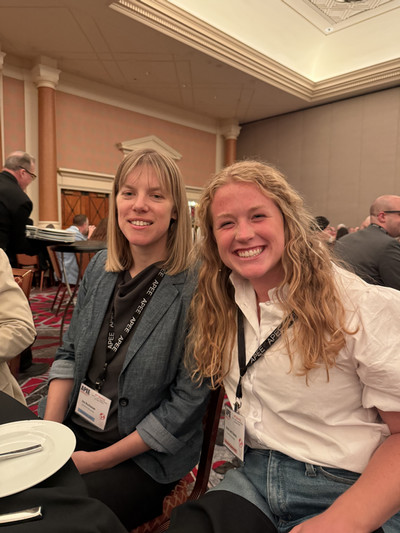 Harms’ research examined the barriers entrepreneurs face before launching a business, focusing on how inequality, regulatory demands and limited access to capital impact economic growth. Comparing the United States and South Africa, she highlighted how institutional differences contribute to disparities in investment activity and GDP per capita, underscoring the connection between economic freedom and opportunity.
Through her experience at the conference, Harms said she developed a deeper understanding of global entrepreneurship challenges. “I gained a deeper understanding of how often entrepreneurship in developing countries is often done out of necessity instead of opportunities and other barriers that limit business growth and entrepreneurship in these areas,” Harms said. She added that the experience shaped her future interests, noting, “This conference helped further drive my curiosity towards understanding how business can be one avenue of poverty alleviation in under-sourced areas.”
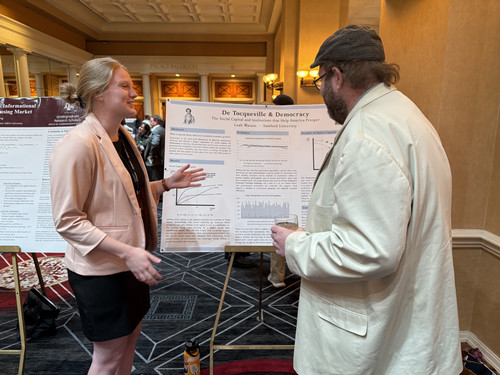 Watson’s research explored the role of social capital and institutions in supporting economic prosperity, drawing on the ideas of Alexis de Tocqueville. Her work examined how trust, governance and civic structures contribute to long-term economic success in the United States.
“The conference was extremely helpful to me in terms of networking and experiencing the active academic side of economics,” Watson said. Reflecting on presenting and engaging with others, she added, “I really enjoyed presenting and discussing my paper with other students and professors as well as learning from them in these breakout sessions.”
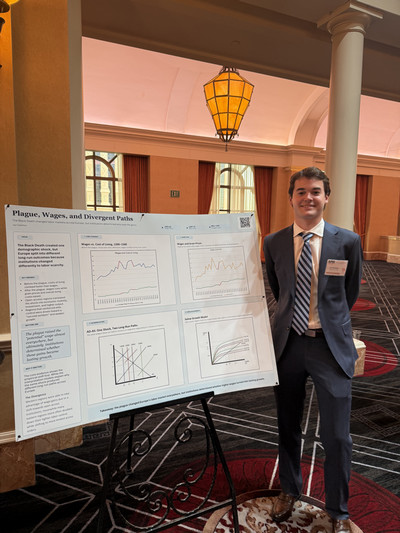 Clemmer’s research analyzed the economic impact of the Black Death, emphasizing how political and legal institutions shaped long-term outcomes across regions in Europe. His work argued that while the pandemic created a shared demographic shock, differing institutional responses determined whether regions experienced growth or stagnation. The opportunity to present and connect with others in the field left a lasting impression. “I really enjoyed the chance to represent Samford, and meet with individuals in the field of economics,” Clemmer said. He also pointed to the doors the experience opened for his future, noting, “Outside of the poster presentation, I was approached by several people during the conference about opportunities to further my education by pursing a PhD in economics.”
Through presenting research, attending sessions and building connections, Clemmer, Harms and Watson gained valuable experience that extends beyond the classroom. Opportunities like APEE equip Brock School of Business students with the tools to think critically, communicate effectively and engage confidently in professional environments, and is a testament to why The Wall Street Journal ranks Samford No. 3 in the nation for career preparation.
With continued faculty mentorship from leaders such as Carden and Joy Buchanan, Brock School of Business remains committed to providing hands-on learning experiences that prepare students for meaningful careers and leadership in business, economics and beyond.