


Samford University’s Orlean Beeson School of Education, in partnership with the Office of Community Enrichment, hosted the 2026 Trinity Forum on Feb. 17, bringing together educators, students and community partners for an evening of dialogue centered on generational differences in teaching and learning. Designed to foster thoughtful collaboration across disciplines and experiences, the forum created space for participants to explore how generational perspectives shape communication, relationships and learning environments while working toward more supportive and inclusive communities.
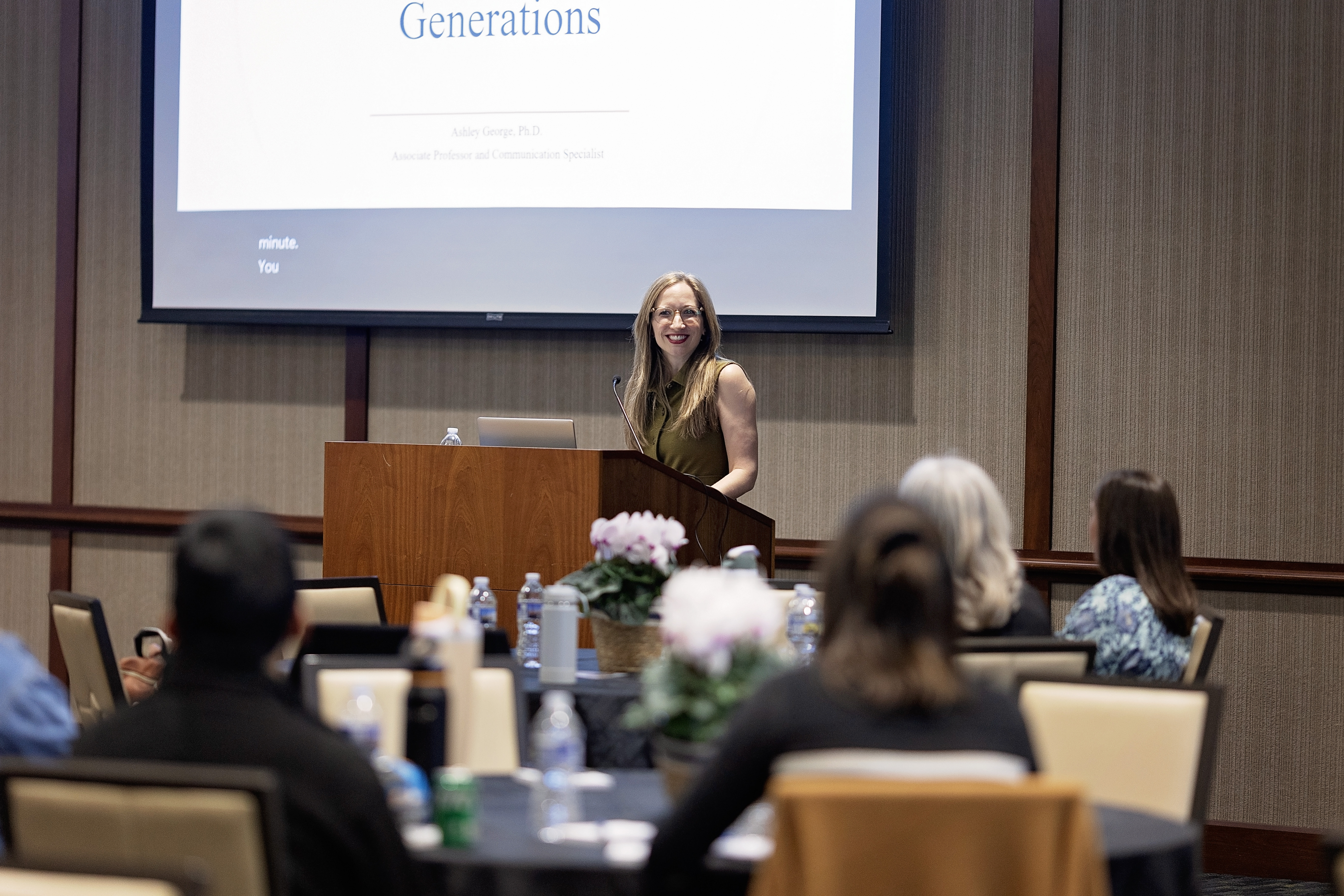
The evening featured keynote speaker Ashley George, associate professor of communication studies in Samford’s Howard College of Arts and Sciences, who delivered an address titled “Maintaining Effective Communication Across Generations.” A communication educator with more than 17 years of higher education teaching experience, George specializes in interpersonal communication skill development and regularly provides training to professionals across industries on navigating difficult conversations and strengthening workplace relationships.
George emphasized the importance of presence, empathy and intentional listening when communicating across generational lines, noting that differences can create opportunities for connection rather than barriers.
“It’s such a beautiful opportunity when we have a chance to communicate with people of different generations because it’s an opportunity for us to express the love of God,” George said.
Her presentation explored several factors influencing intergenerational communication, including the impact of digital environments on attention and empathy, increasing communication apprehension among younger generations and the growing need for emotional and social intelligence. She also reflected on cultural shifts that have reduced shared social experiences across generations, pointing to changes such as the transition from in-person activities to digital alternatives.
“The digital divide has separated our generations more than ever,” George said.
Attendees engaged directly with the content by completing a communication apprehension questionnaire to reflect on their own experiences and tendencies in different relational contexts.
“There are different reasons why we feel apprehension in different spaces. Culture and gender differences can drive this,” George added.
In addition to the keynote address, the event included the presentation of the Trinity Forum Award to Celeste Hill, professor and chair of human development and family science in the School of Education. The award recognizes an individual or organization who embodies service and demonstrates a Christlike understanding and respect for differences within the community.
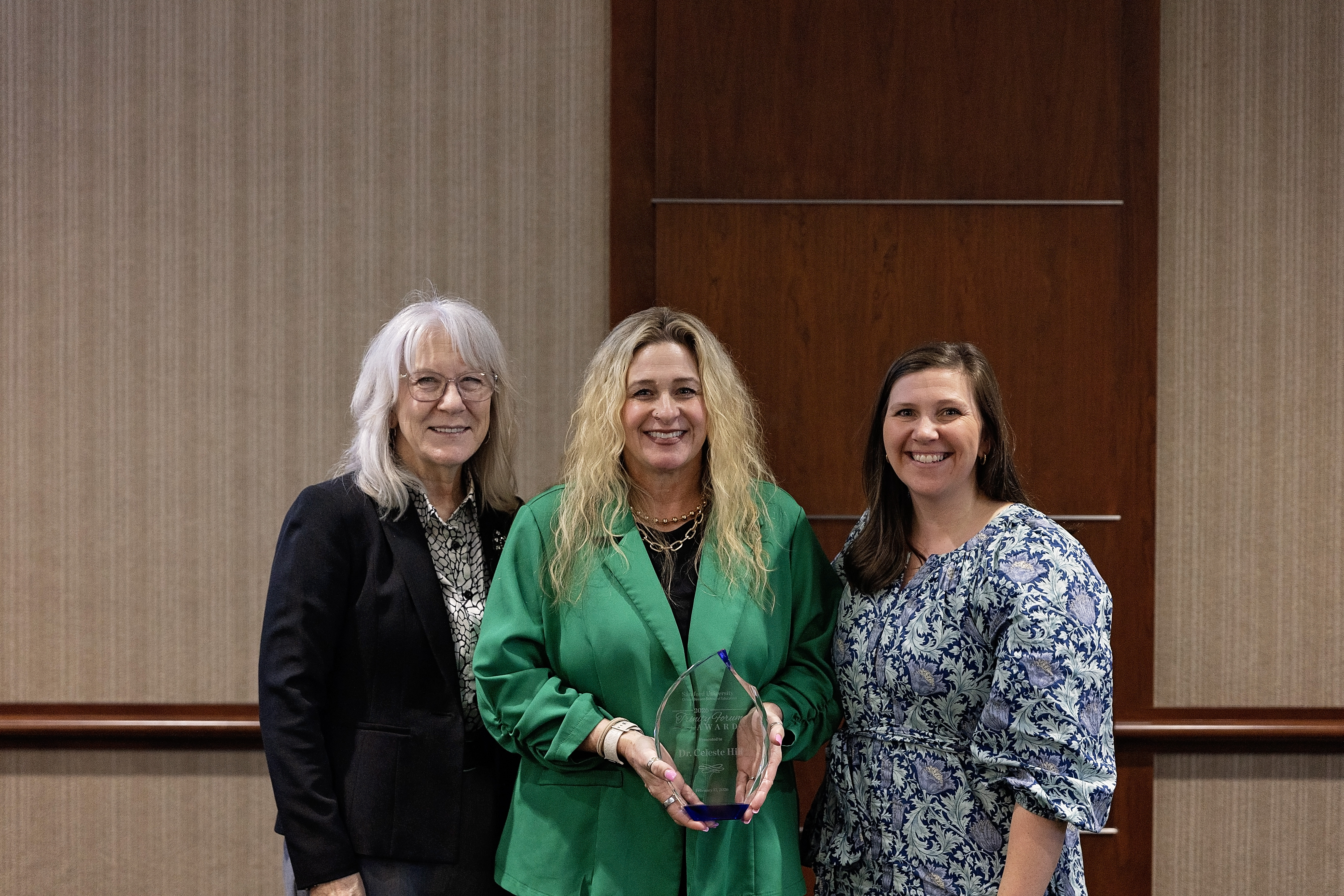
A Certified Family Life Educator, Hill’s scholarship and teaching focuses on aging, intergenerational relationships, animal-assisted intervention and professional identity development within family science. She has presented nationally, published extensively and authored Pathways to Professionalism in Family Science. Her work consistently bridges research and practice, equipping students and professionals to support families across the lifespan.
The forum concluded with facilitated roundtable discussions, where attendees reflected on George’s insights and shared their own experiences navigating generational differences in educational, professional and personal contexts. The conversations encouraged meaningful connection across roles and perspectives, reinforcing the forum’s mission to promote understanding and collaboration.
The event was made possible through the support of the Louie M. and Betty M. Phillips Foundation.
