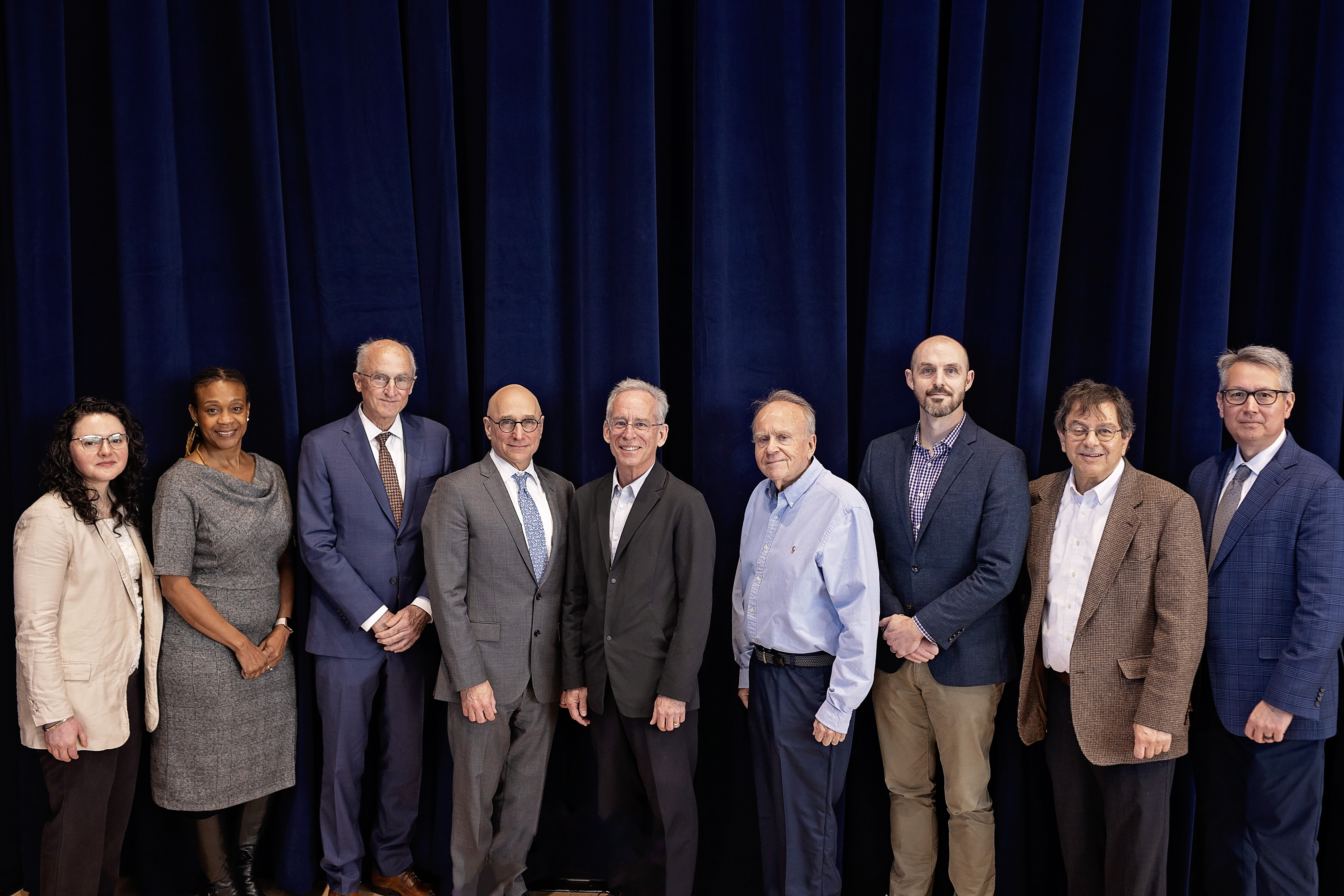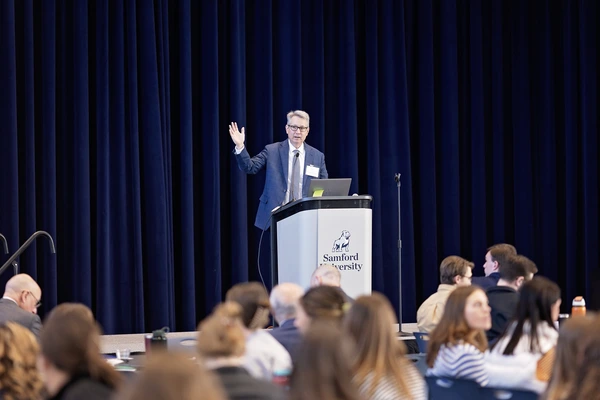
Samford University’s Office for Faith and Health hosted its annual Healthcare Ethics and Law (HEAL) Institute on Feb. 6. This year’s theme, “Trust in Science and Government: What About Vaccinations?,” examined vaccine hesitancy, public trust and the ethical questions shaping public health decision-making. The conference was presented in partnership with Orlando Health’s Institute for Learning and the Baptist Health Foundation.
The full-day event brought together more than 230 students and faculty in nursing, health professions, philosophy, law and community health, as well as practicing professionals.
In his opening remarks, Scott Bickel, PhD, director of the Office for Faith and Health, said the topic was chosen because many people continue to wrestle with questions about vaccines and public trust. He encouraged attendees to keep Proverbs 3 in mind—to trust in the Lord and lean not on their own understanding—as they approached the day’s conversations.
The conference featured speakers from across Samford’s campus—all experts in their respective fields—who provided evidence-based and personal perspectives on the complexities of vaccination.
The morning sessions opened with Tom Huddle, MD, PhD, emeritus professor of medicine at the University of Alabama at Birmingham. In “Setting the Stage: Misinformation—How Did We Get Here and How Can We Escape?,” Huddle addressed modern medical misinformation, how trust has shifted over time and the challenges clinicians face as they work to offer clear and reliable guidance.
Emily McCarty, PhD, assistant professor in Samford’s Department of Classics and Philosophy, followed with “Philosophical Aspects: Aquinas on Our Duties to Our Community.” Drawing on Thomas Aquinas, McCarty highlighted how concepts of the common good and communal responsibility continue to shape ethical decision-making in public health.
Adam Cifu, MD, professor of medicine at the University of Chicago and co-editor of the Sensible Medicine Substack, continued with “Health Care Aspects: Vaccine Skepticism and Hesitancy—Definitions, Experience, Management.” He outlined distinctions between skepticism and hesitancy, described what clinicians commonly encounter and offered approaches to meaningful, evidence-based communication with patients.
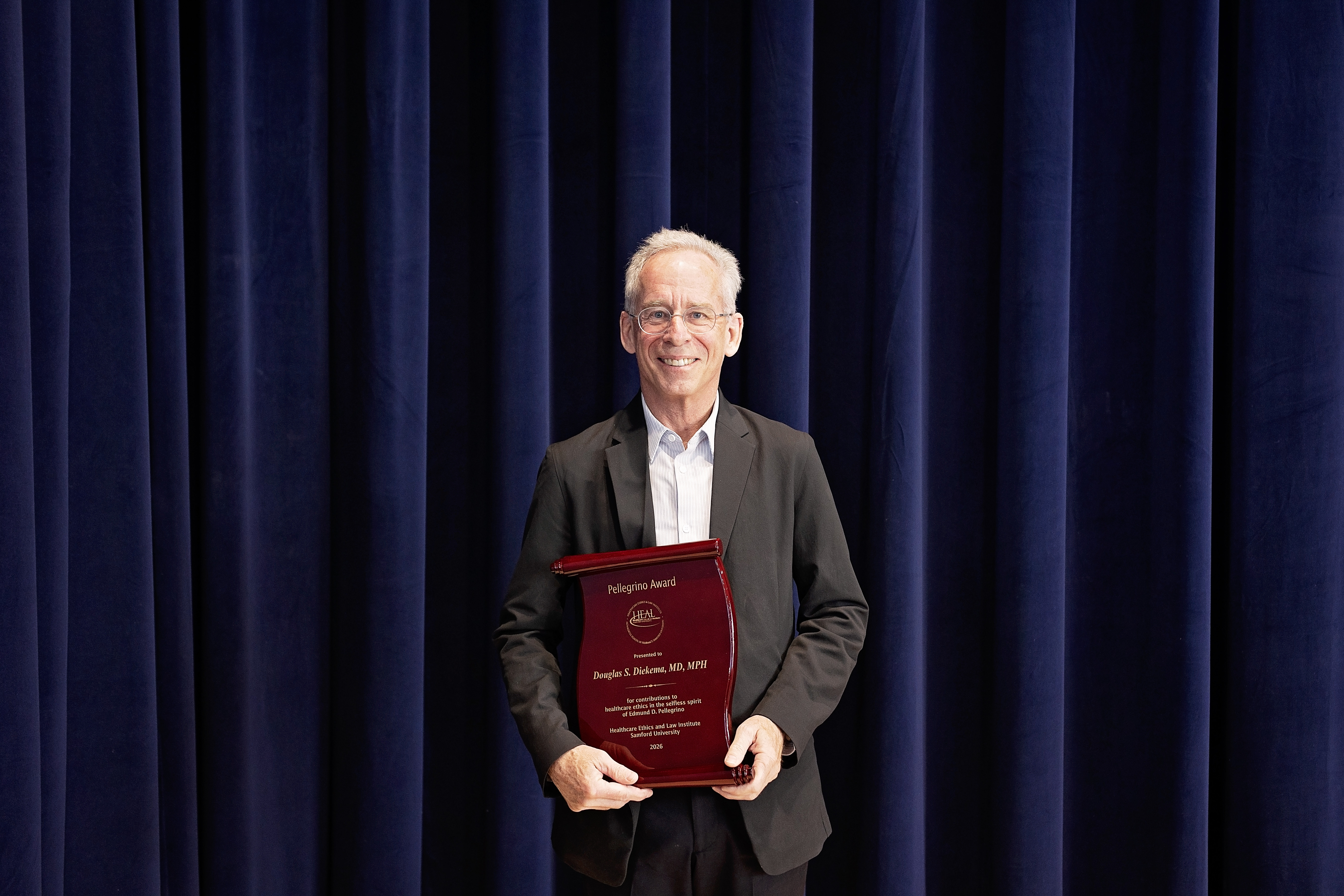 The morning concluded with the Pellegrino Award keynote delivered by Douglas Diekema, MD, MPH, professor in the Division of Bioethics and Palliative Care at the University of Washington School of Medicine and chair of the Institutional Review Board Committee at Seattle Children’s. In “Reflections on Trust in Medicine and the Clinician’s Response to Vaccine Hesitancy,” Diekema reflected on the erosion of trust in clinical relationships and clinicians’ responsibility to engage patients with clarity and compassion.
After the morning’s focus on ethics, philosophy and clinical practice, the afternoon turned to legal, advocacy and pharmacy-based perspectives. David Smolin, JD, the Harwell G. Davis Professor of Constitutional Law and director of the Center for Children, Law and Ethics at Samford’s Cumberland School of Law, opened this portion of the program with “Trust and Coercion: Historical and Contemporary Roles of Legal Coercion and Incentives Regarding Adult and Pediatric Vaccinations.” Smolin outlined how laws, mandates and incentives have shaped vaccination practices and how these structures influence public trust.
Following Smolin, Scott James, MD, associate professor of pediatric infectious diseases and director of the Pediatric Infectious Diseases Fellowship Program at UAB Pediatrics, presented “Childhood Immunizations: A Healthy Approach to Advocating for the Common Good.” James emphasized the importance of routine immunizations, patient-centered communication and the broader community benefits that come from strong vaccination practices.
The final formal presentation was delivered by Jennifer Campbell, PharmD, co-owner of MedsPLUS Consulting in Birmingham, alongside colleague Pauline Long, PharmD. In “Restoring Trust Through Community Health: The Role of Pharmacists in Vaccine Confidence and Access,” they highlighted the role pharmacists play as accessible health professionals, especially in communities with limited resources, and offered approaches to improving vaccine confidence and supporting sustained community health efforts.
The conference concluded with an open panel discussion, allowing attendees to ask questions and further engage with the day’s speakers.
The HEAL Institute supports the complex relationships among patients, health care providers, decision-makers and institutional ethics committees. Established in 1999 as an interdisciplinary effort within Samford University, HEAL advances its mission through education, outreach and collaboration. In partnership with the Office for Faith and Health, the institute equips students and professionals to address ethical challenges in modern health care while keeping Samford’s mission at the center of its work.