


Read more stories like this one in the 2025-26 issue of Leadership, Research & Innovation in Education, which can be read in its entirety here.
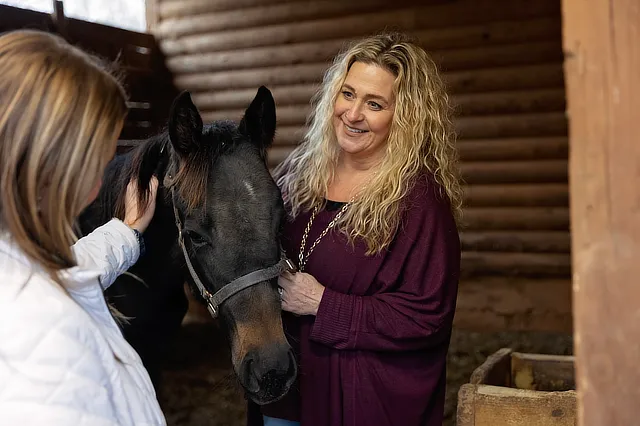
Beginning in fall 2026, Samford University Orlean Beeson School of Education’s Department of Human Development and Family Science (HDFS) will expand academic opportunities for students by offering a new concentration in Animal Assisted Services (AAS), a field that is rapidly growing across health care, education, nonprofit and community settings. Rooted in Samford’s mission to prepare compassionate, service-minded professionals, this new pathway equips students to integrate foundational family science coursework with evidence-based practices in human–animal interaction.
The idea for the new concentration emerged from increasing student interest and a broader cultural movement recognizing the therapeutic and relational benefits of animals. Whether in hospitals, schools, senior living facilities or community programs, trained animals are being incorporated into services that reduce stress, support healing and improve emotional well-being.
Celeste Hill, department chair explained, “In the many different places that we serve, we encounter animals. In these places, organizations are using animals as a means of reducing fear and anxiety.”
The AAS concentration will offer students a strong academic foundation grounded in human development, family systems and ethical practice. All HDFS students will complete the core family science curriculum, and those pursuing the AAS concentration will take 15 extra hours of specialized coursework and one elective. Courses will explore counseling foundations, human–animal bonding, nonprofit leadership, trauma-informed care and the use of animals within health care systems. Together, they introduce students to the theories, skills and responsibilities required to use animals purposefully and responsibly in professional settings.
Building on the core HDFS curriculum, it offers students a focused pathway into emerging work with human–animal interaction. The program equips students for impactful roles across healthcare, education and community services while supporting those pursuing graduate study in fields where animal-assisted approaches are increasingly valued.
One of the concentration’s defining features is its emphasis on ethical and welfare considerations. Students will learn not only how to support the well-being of the individuals they serve but also how to ensure the health and safety of the animals involved.
“We often only think about the well-being of the individual and not the animal,” Hill said. “We must be sure that we’re also protecting the health of the animal.”
This principle aligns with national frameworks from organizations such as Animal Assisted Intervention International and Pet Partners, which inform the program’s approach to training and practice.
Students will also participate in an internship with an organization that utilizes animal-assisted services. These real-world experiences allow students to apply classroom knowledge in settings such as hospitals, therapy centers, community nonprofits and educational programs.
“Just being in the presence of an assistance animal can take the individual’s attention away from what they’re going through,” Hill said.
The addition of this concentration will advance Samford’s mission of innovative, student-centered education and will further enhance distinctives highlighted by the Wall Street Journal, which ranked the university #3 nationally for career preparation and #7 for student learning opportunities.
GIVE: Support impactful programs like this at Orlean Beeson School of Education.
