


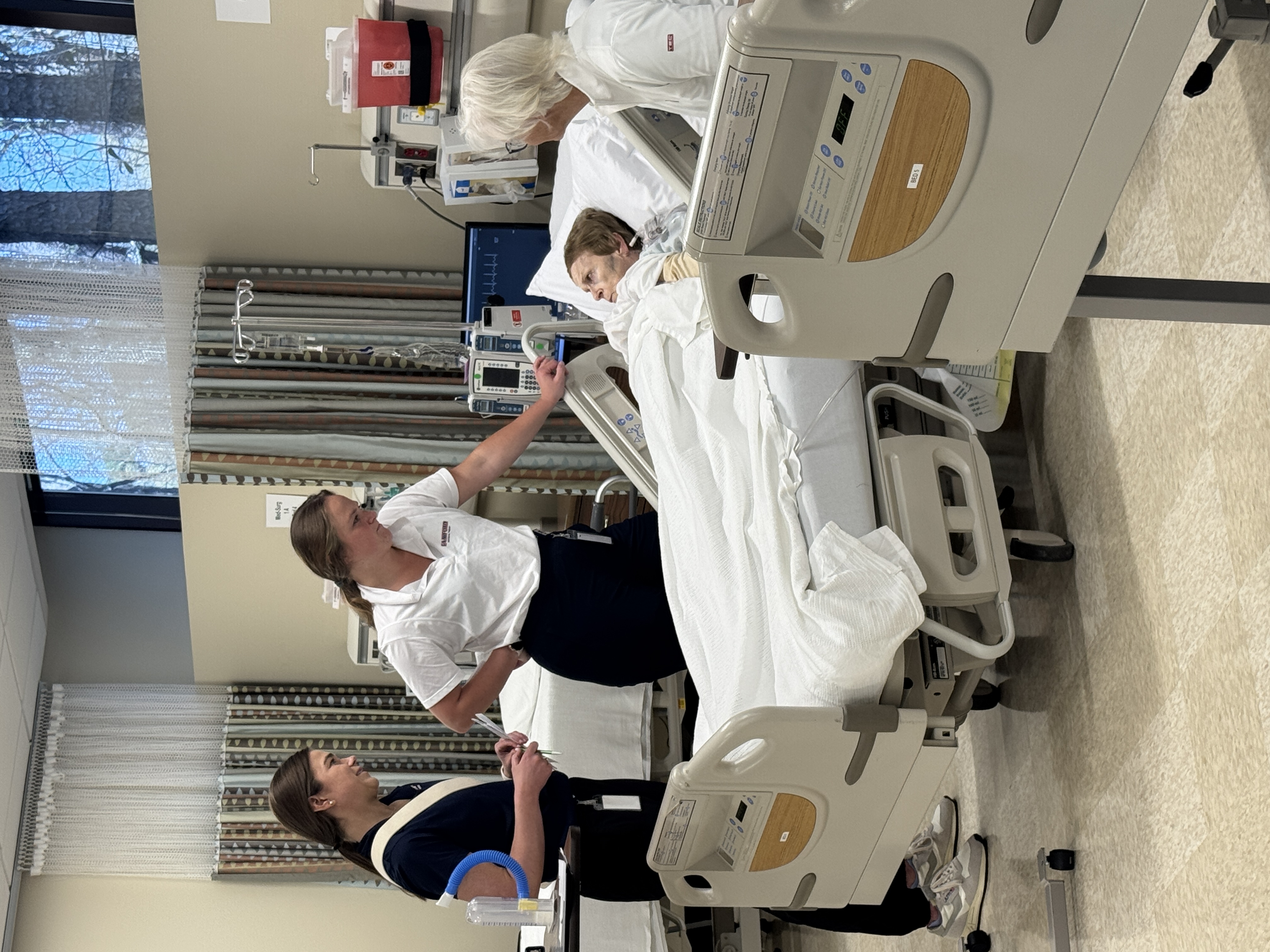
Interprofessional education under one roof is a specialty of Samford University’s Experiential Learning and Simulation Center. One way the center brings this experience to life is through Acute Care Simulation, which pushes students to use every skill their programs teach.
The March event featured a large-scale simulation that used high-fidelity manikins and standardized patients, who are actors trained to portray realistic medical scenarios. Students from majors across Samford’s campus including Theatre and Dance, World Languages and Cultures, Nursing, Physical Therapy and Physician Assistant Studies took part in the experience, along with volunteer students from Thompson High School.
“Interprofessional education is essential for preparing students for the workforce,” said Jill Pence, executive director of the Experiential Learning and Simulation Center. “This center gives students across campus a place to learn together and gain the experience they need to serve their communities.”
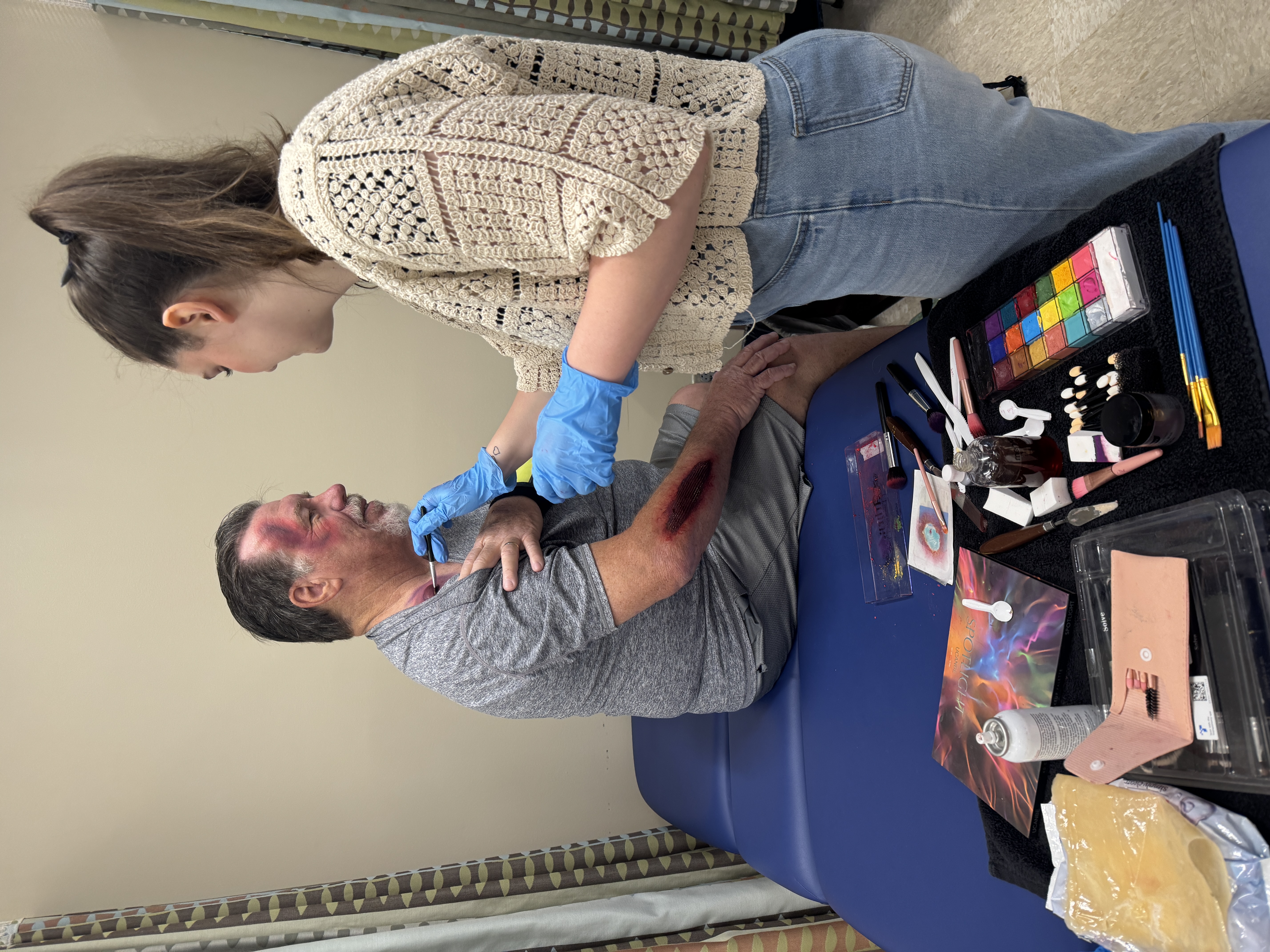
Before the action began, theatre students helped set the stage for realism behind the scenes. Drawing on techniques from their makeup design course, they crafted intricate moulage, a form of makeup artistry that mimics injuries and medical conditions, bringing each scenario to life. Once the patients were ready, the Simulation Center opened as a fully functioning hospital environment. The 22,000-square-foot space within the College of Health Sciences became a series of active care units where students move, respond and make decisions in real time.
“I was invited to volunteer as a floater, acting as a second pair of hands when needed in different situations,” said Christian McLaughlin, a senior at Thompson High School. “I was impressed by how the students treated it like a real-world scenario, crowding around the manikins to perform CPR. This experience gave me a clearer understanding of what I want to pursue when I get to college.”
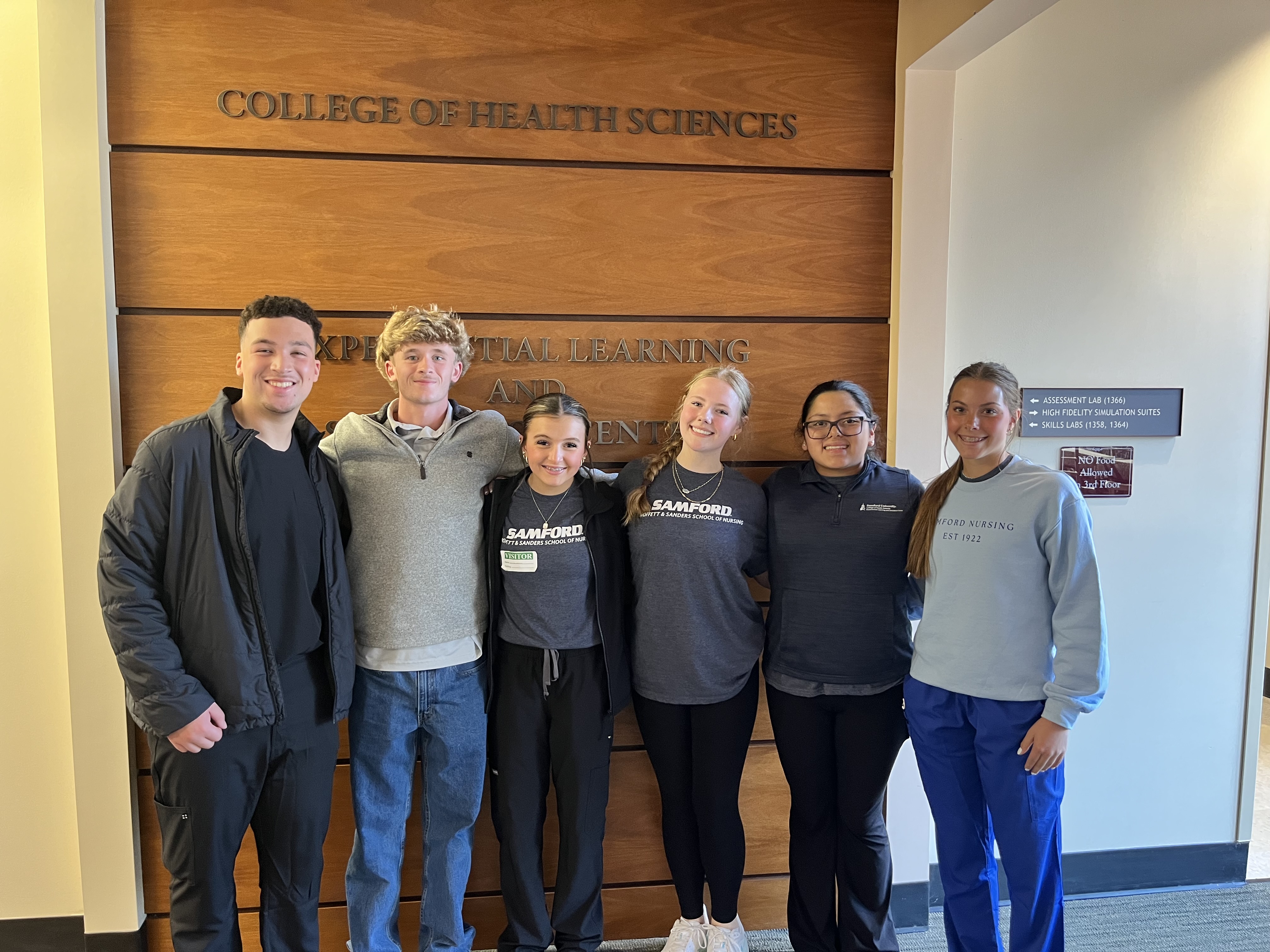
Undergraduate nursing students joined graduate students in physician assistant studies and physical therapy, along with six students from Thompson High School in Alabaster, Alabama, for all three simulation rounds. To reflect the diversity of real clinical encounters, student interpreters from Howard College of Arts and Sciences assisted with communication for a patient who did not speak English.
“Operating independently in the role of a nurse is always a valuable learning experience and a confidence builder,” said Taylor Gumbart, a fourth-semester nursing student. “Working directly with the physician assistant students helped me understand their scope of practice and learn how to collaborate in patient care more effectively.”
Health care programs have traditionally trained students in separate settings with few chances to practice working as a team. This simulation helps close that gap by giving students a safe and structured place to move from routine patient interactions to urgent situations such as cardiac arrest or respiratory distress. In these moments, they learned to adapt quickly and support one another in a fast-paced environment.
The Experiential Learning and Simulation Center hosts simulations throughout the academic year, but the Acute Care Simulation is one of the largest events held within the College of Health Sciences facilities.
“It was a great experience that I know will strengthen my patient care and my ability to communicate and work with other professions in the future,” Gumbart said. “I feel confident that I can care for a patient on my own because of the supportive environment the Simulation Center faculty and staff created.”
