



For more than four decades, Eric Olson helped audiences see worlds that did not exist until the curtain rose.
A painted backdrop became a city street. A carefully placed light transformed a stage into a moonlit landscape. Costumes, scenery and technical artistry combined to tell stories that lingered long after the final applause.

Now, through the Eric Olson Theatre Production Design and Technology Scholarship, Eric, a former School of the Arts professor, hopes to ensure that future generations of Samford University theatre students experience the same opportunity to create, innovate and transform stories into living works of art.
The scholarship supports students pursuing theatre production design and technology—disciplines whose practitioners rarely take center stage, but whose work makes every theatrical production possible. It is a fitting legacy for a designer, educator and mentor whose influence extends far beyond the hundreds of productions bearing his name.
Drawn to the Magic of Live Performance
Eric's path to theatre began long before he stepped into a university classroom.
Like many of his generation, he remembers watching The Beatles perform on The Ed Sullivan Show. The experience proved transformative. As a teenager, he played bass guitar in garage bands inspired by artists such as Jimi Hendrix, Eric Clapton and Janis Joplin. Yet it was not only the music that captivated him.
“I was drawn to the excitement of the live audience-performer relationship, the lighting and the atmosphere of the event,” he said. “The stage trickery and theatrical ritual amazed me.”
That fascination grew during his years at the University of Montevallo, where theater faculty recognized his talent and hired him as a stagehand and lighting designer. Working on productions and hosting nationally known performers through the university's concert series broadened his understanding of what stage design could accomplish.
He later earned a Master of Fine Arts in scenography from the University of North Carolina at Greensboro, studying under internationally respected designers and educators, including his mentor Andreas Nomikos. The lessons he learned there would shape both his artistic philosophy and his approach to teaching for decades to come.
Building Something New at Samford
When Eric graduated in 1974, a dozen universities interviewed him for faculty positions. One opportunity stood apart. Samford was constructing a new arts facility and seeking someone who could help shape its theatrical future.
“The thought of opening a new theatre building with the latest technology really appealed to me,” he recalled.
After meeting then-chair Harold L. Hunt and touring the unfinished Leslie S. Wright Fine Arts Center, Eric accepted the position. What began as a part-time appointment quickly developed into a career defined by creativity, craftsmanship and service to students.
Along the way, he continued to work professionally, designing for organizations including Birmingham Children's Theatre, Opera Birmingham, Birmingham Ballet and Alabama Shakespeare Festival. During the summer of 1976, he spent 90-hour workweeks painting scenery at Music Theatre Wichita, learning alongside professional New York scenic artists while helping produce five large-scale musicals. Experiences like those sharpened his skills and enriched the classroom, giving students a direct connection to the standards and expectations of the professional theatre world.
More Than Sets and Lights
Ask Eric about design, and the conversation quickly turns to something deeper than scenery or technology.
“The over-arching goal of good visual theatre storytelling and theatre design craftsmanship remains the presentation of life's truth on stage,” he said.
That philosophy guided his work across approximately 300 design credits spanning scenery, lighting and costumes. A life member of United Scenic Artists Local 829 in New York City, he contributed to productions ranging from Driving Miss Daisy at Alabama Shakespeare Festival to Man of La Mancha at UAB/Town and Gown Theatre. He also assisted on the world premiere production of Angels in America, Part II: Perestroika at London's National Theatre. It was one of 12 productions he worked on in England while on sabbatical in 1993.
Yet when discussing his career, Eric returns repeatedly to students.
For him, theatre design and technology are best learned through apprenticeship—working side by side with experienced artists, solving real problems and creating tangible results.
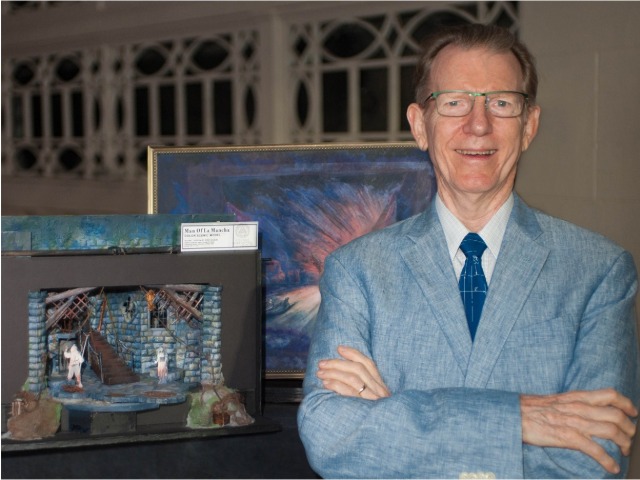
He describes handing a student a paintbrush, a scenic rendering and responsibility for a portion of a set. Then comes the moment he cherishes most: watching confidence grow as the project takes shape.
“The joy for me is seeing them grow as they paint the project,” he said.
Much later, when actors take the stage, costumes come alive under carefully focused lights and audiences respond to a completed production, students begin to understand the significance of their contribution. What they created behind the scenes has become part of the story unfolding before hundreds of people.
Passing the Torch
That spirit of mentorship ultimately inspired Eric to establish the scholarship that bears his name. He sees theatre design as a centuries-old tradition in which knowledge passes from master artists to students, from one generation to the next.
He often describes that inheritance as a kind of artistic lineage. His own mentor, Andreas Nomikos, brought lessons shaped by years of professional work in Athens, Greece, New York City and across Europe. Those lessons influenced Eric, whose work later intersected with fellow designers, technicians and educators who would go on to mentor students of their own.
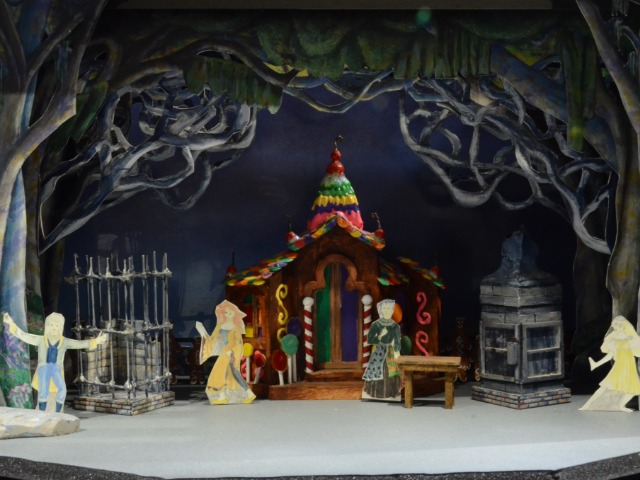 The scholarship formalizes the passing of that torch. It also sends a clear message about the School of the Arts’ commitment to students whose work often happens backstage.
While actors and performers regularly draw attention and recognition, every successful production depends upon designers, technicians, scenic artists, electricians, costume craftspeople and stage managers. Their creativity shapes the audience's experience long before the first line is spoken.
“Having a scholarship supporting design and technology is an important marker that Samford's School of the Arts is serious about visual theatre artists,” Eric said.
Investing in Artists Audiences Never See
Today's theatre students face a complex landscape. Digital platforms provide endless inspiration, but they can also make it difficult to understand the larger artistic traditions that inform great design.
Eric believes students must understand both where theatre has been and where it is going. From the Greeks and Romans to the Renaissance and modern era, he sees theatre history as the foundation upon which innovation is built. At the same time, he embraces new technologies that are transforming the creative process. In Samford's scene shop, tools such as a CNC routing machine, a computer-controlled cutting machine that automates carving, milling, and routing of materials like wood, plastic and aluminum, now allow students to move seamlessly between traditional craftsmanship and contemporary production methods.
Regardless of how technology evolves, he believes the fundamentals remain unchanged.
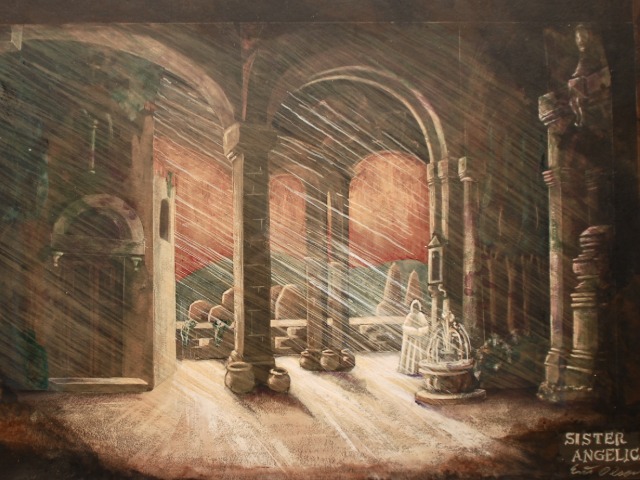 Line. Shape. Scale. Color. Texture. Light.
Master those elements, he says, and students will have the tools they need to tell compelling stories.
The scholarship helps make that preparation possible by investing in students who possess the qualities Eric values most: passion, courage, curiosity, honesty and excellence. He encourages aspiring designers to read widely, collaborate well and approach every project with integrity.
“Theatre is a small world,” he said. “Never burn your bridges or lie on your resume.”
A Legacy That Continues
Eric hopes scholarship recipients understand that theatre design is an opportunity and a responsibility.
Designers are collaborators, artists, problem-solvers and leaders. They are responsible for translating ideas into physical reality and ensuring every detail is ready when the curtain rises.
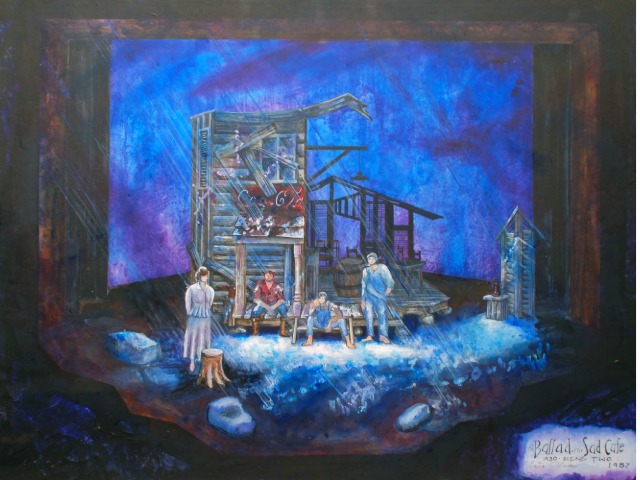 “Once responsibility is bestowed on the designer granting them authority to create part or all of the physical production, singular preparation becomes paramount,” he said. “When the audience is waiting breathlessly for the magic of live theatre to materialize before them, it is too late for preparation.”
That commitment to preparation, excellence and service has defined Eric's career. It also defines the purpose of this new scholarship.
Through the Eric Olson Theatre Production Design and Technology Scholarship, his influence will continue long after the final curtain call on his own remarkable career. Future designers, technicians and storytellers will carry forward the lessons he learned from his mentors and faithfully passed on to generations of Samford students. And with each production they help create, another chapter of that legacy will unfold—one student, one stage and one story at a time.
GIVE: Join Eric Olson in supporting arts education at Samford.
