







Sports Analytics Research

Quantifying Fan Engagement and Sentiment During Live Games Via Social Media Analytics
Live sports have always produced instant reactions. What has changed is that those responses are now visible, searchable and measurable the moment they happen. A missed penalty, a controversial call or a last-second win no longer lives only in the stadium or the living room — it plays out in real time across millions of posts.
Discovering the Science of Clutch Performance and Measuring Pressure Resilience in Athletes
TWith two seconds on the clock and a one-point deficit, a player catches the inbound pass, squares up and releases. Millions of fans call this instinct or nerve. Researchers call it something more precise, a measurable interaction between physiology, cognition and training history. Understanding what happens inside an athlete's body and brain during these moments is reshaping how teams scout, train and evaluate talent.
Why Pass Volume Matters More Than We Thought: Lessons from the 2026 World Cup
The 2026 FIFA World Cup provided a unique opportunity to examine which performance metrics truly predict success on soccer's biggest stage. Using regression analysis on 104 matches, we conducted three empirical studies analyzing team statistics, passing volume, and match conditions. Our headline finding: pass volume explained 85% of expected goals variation at the World Cup, a dramatic jump from the 56% observed across 12 seasons of English Premier League data. This suggests that international tournaments reveal the true relationship between metrics that domestic league play obscures. By examining FIFA rankings, possession, shots on goal, expected goals, and dozens of other variables, we identified which stats matter most for winning and what this means for teams preparing for the upcoming Premier League season.
Samford University Expands Sports Analytics Center, Transforming Student Opportunities
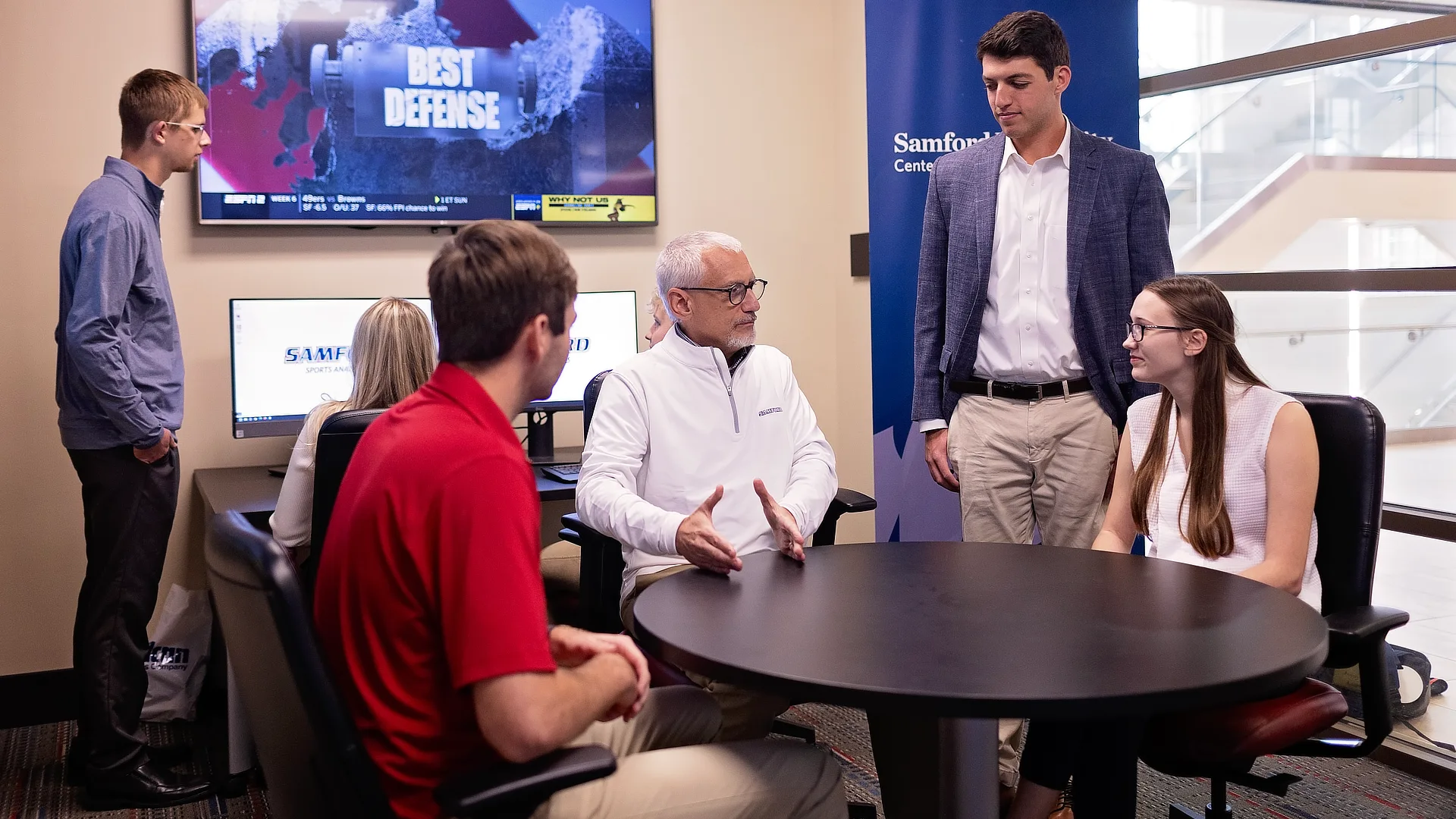
Samford University has expanded the Andrews-White-Cooney Center for Sports Analytics, dramatically enhancing experiential learning opportunities and industry connections for students pursuing careers in the rapidly growing sports business sector.
More Teams, More Surprises? What 30,000 Simulated World Cups Say About the 48-Team Format
The 2026 World Cup is the largest in the tournament’s history: 48 teams, 12 groups of four, and a brand-new Round of 32. With it comes a familiar promise — and a familiar worry. A bigger field should mean more chaos, more dark horses, and a harder road for the favorites.
Predicting Every Round of 32 Matchup
A talent-gap model built from 96 World Cup knockouts


