


Before the orchestra strikes its opening chord and before a single actor steps into the light, Oklahoma! is already telling a story.
It lives in the grain of weathered wood, layered with coats of paint so it looks as though it has stood for decades beneath the Oklahoma sun. It moves in the sway of a skirt designed to catch air like a summer breeze and in the careful construction of a porch roof—authentic enough to feel real but angled so it never steals light from an actor’s face. Backstage—where sawdust, fabric swatches and rehearsal schedules overlap—America’s first great musical is being built piece by piece.
As Samford University’s Department of Theatre and Dance prepares to bring Oklahoma! to the stage, students and faculty are stepping into a work that did far more than entertain audiences when it premiered in 1943. Often called the first modern American musical, Oklahoma! united story, song, dance and design in a way Broadway had never seen—and captured a pivotal moment in American identity.
 That legacy feels especially resonant as the nation approaches the commemoration of the 250th anniversary of the founding of the United States. While the milestone is not the focus of the production, the themes woven throughout Oklahoma!—community, independence, progress and belonging—echo quietly through rehearsal rooms and backstage workspaces.
A Story Rooted in Place—and People
For professor Mark Castle, Theatre and Dance chair and director of the production, Oklahoma! represents both a historic milestone and a deeply personal journey.
“Oklahoma! is a classic, a pioneer in the Golden Age of American musical theatre,” Castle said. “It’s an art form that is uniquely American, which brings together many traditions and tells a story of small-town community that still rings true today. Oklahoma! was the first musical I performed in back in high school. As a kid in England, I could only dream of what it might be like to be a cowboy in the American West. Today, I’m married to an American, and my in-laws live on a cattle farm in Oklahoma just miles from the real location where the play is set.”
Set in Indian Territory in 1906, just before Oklahoma became a state, the musical follows farmers and cowboys wrestling with identity, land and one another, as a territory on the brink of statehood searches for unity.
When the show premiered during World War II, its message resonated powerfully.
“GIs would come to see the show before they shipped out or while they were home on leave,” Castle said. “It gave them a sense of pride in their country, and an example of what they were fighting for.”
That sense of hope—ordinary people striving for something bigger—continues to define the production.
“The story is commonplace,” Castle said, “but it represents something greater: the idea that people can make their own way in the world.”
TICKETS: See Oklahoma! come to life on the Wright Center Stage
Rehearsing a Nation’s Story
That idea comes to life most vividly in rehearsal, where student performers dig beneath the familiar melodies to uncover the honesty that has sustained Oklahoma! for more than 80 years.
Senior musical theatre student Jackson Griffee, who plays Curly McLain, was surprised during that process.
“I always knew Oklahoma! as a fun, silly cowboy show,” Griffee said. “But once we really started digging into the script, I realized how honest the show is.”
Griffee described Curly as a catalyst for the story—a charismatic cowboy who sets the tone for the town and the audience.
 “He’s young, energized, sometimes rash, and he goes all in on what he believes in,” Griffee said. “He keeps the town moving.”
Curly also serves as a bridge between competing worlds.
“He represents the cowmen, but he’s the first to shift across lines,” Griffee said. “He connects both communities.”
That tension mirrors the larger themes of the show—and the nation it reflects.
“There’s a line where Curly talks about how the country is changing, and we have to change with it,” he said. “It echoes what America needed in the early 1900s and again in the 1940s.”
Mary Taylor Spell, a senior musical theatre student who portrays Laurey Williams, sees her character at the center of that change.
“Laurey is a headstrong farm girl,” Spell said. “Her coming of age parallels the changes Oklahoma—and the country—were facing.”
Spell noted the show’s emotional depth quickly revealed itself in rehearsal.
“It’s often thought of as a toe-tapping spectacular,” she said, “but it’s also about real people at a difficult and pivotal time in American history.”
Oklahoma! carries personal significance for Spell. It’s her final college musical and her only performance on the Wright Center stage.
“It feels like the culmination of everything musical theatre has meant to me,” she said.
Sophomore theatre for youth student Abigail Petit also portrays Laurey in the double‑cast production. She described discovering a similar depth beneath the show’s familiar surface.
 “The complexity of all the characters surprised me,” Petit said. “Golden Age shows tend to get an unfair reputation for being ‘boring’ or ‘flat,’ but the characters in Oklahoma! are anything but.”
As Petit developed her interpretation of Laurey, she focused on the character’s evolution from stubborn independence to purposeful connection.
“Laurey’s arc is moving from independence for its own sake to independence with purpose,” Petit said. “She doesn’t lose herself by learning to work with someone else. She learns how to channel those traits in a way that helps both people grow.”
Petit noted that Laurey’s personal journey mirrors the trajectory of the show itself, as a community learns how to unite without losing its identity.
Building the World Around the Story
Behind the performers, the production design and technical teams work to ensure the world of Oklahoma! feels both grounded and alive.
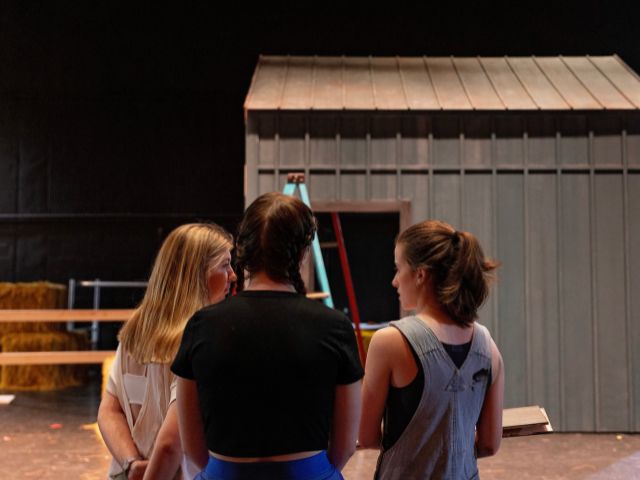
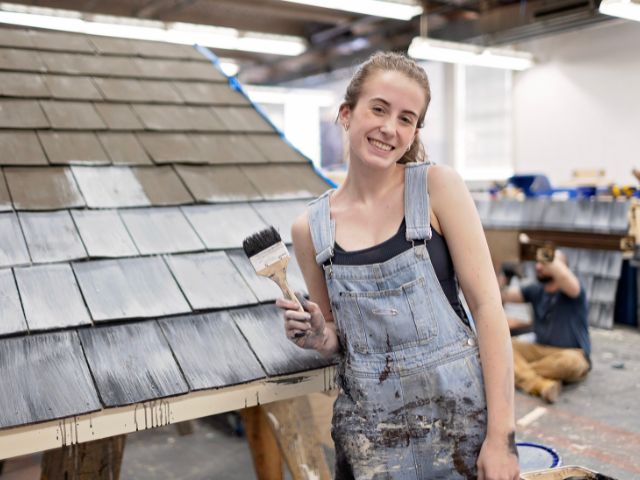 Sophomore production design student Amelia Bradstreet, scenic charge artist and co‑assistant scenic designer, described set design as the foundation that allows everything else to flourish.
“The set establishes the physical and emotional environment,” Bradstreet said. “It has to feel like early 1900s rural Oklahoma but also move quickly to keep pace with the music.”
Limited wing space and challenging sightlines in the Wright Center required careful planning. Scenic elements interlock, fly and transform, allowing scenes to shift seamlessly without disrupting the storytelling.
“Scenic, lighting, costumes and sound work together to shape the emotional journey of the audience, often without them even realizing it,” Bradstreet said.
Lighting as Storytelling
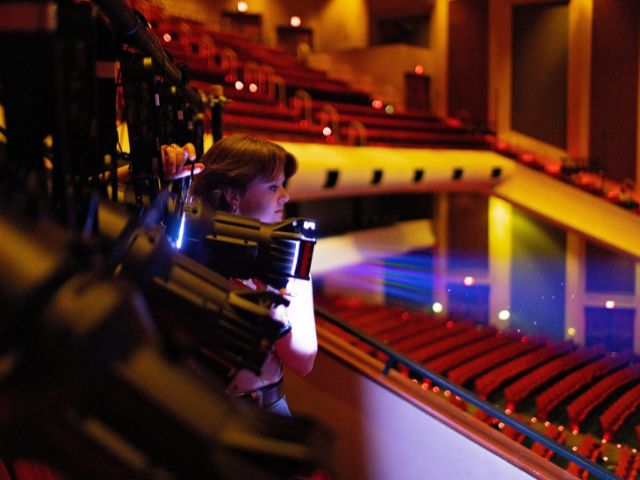
As the set defines the physical world of Oklahoma!, lighting gives that world breath and time.
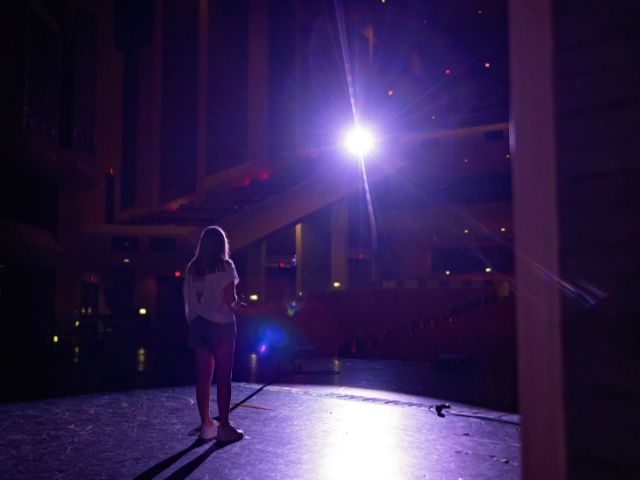 Sophie Tillery is a junior production design student and lighting designer for the show. She aimed to create a sense of openness and naturalism that reflects both the Oklahoma Territory and the ideals at the heart of the story.
“The lighting establishes early Oklahoma Territory through soft amber and pale blue hues that mimic sunlight and an open sky,” Tillery said. “Wide washes reinforce the sense of an endless horizon and open landscape.”
Lighting plays a particularly significant role during moments of heightened emotion, including Laurey’s dream ballet, where color transitions mirror the character’s inner conflict.
“The sequence begins with soft pinks that capture romantic warmth,” Tillery said, “then moves into saturated blues and reds as the dream descends into fear. The color progression mirrors Laurey’s psychological journey from fantasy into anxiety.”
Tillery noted that lighting functions in constant collaboration with the other design elements, enhancing textures in the set, bringing out costume details and guiding the audience’s focus during key moments of performance.
“In Oklahoma!, each design element works together to create the world in which the performers can do their craft,” she said.
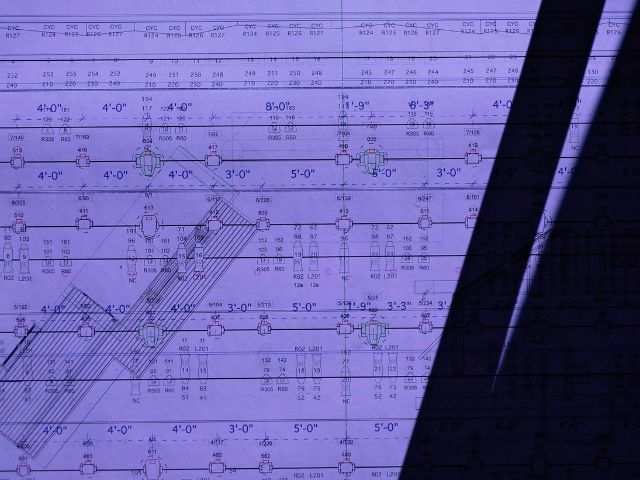 For Tillery, one lighting choice stands out as capturing the spirit of the musical —and the nation it represents.
“The cyclorama acting as the sky,” she said. “By shifting through sunrises, bright midday looks and rich sunsets, it captures not just Oklahoma’s vast physical expanse, but the dreams of its people. During ‘Oh, What a Beautiful Morning,’ a warm sunrise spreads across the stage, echoing Curly’s optimism and setting the tone for a story grounded in hope, possibility and forward motion.”
Costumes That Speak
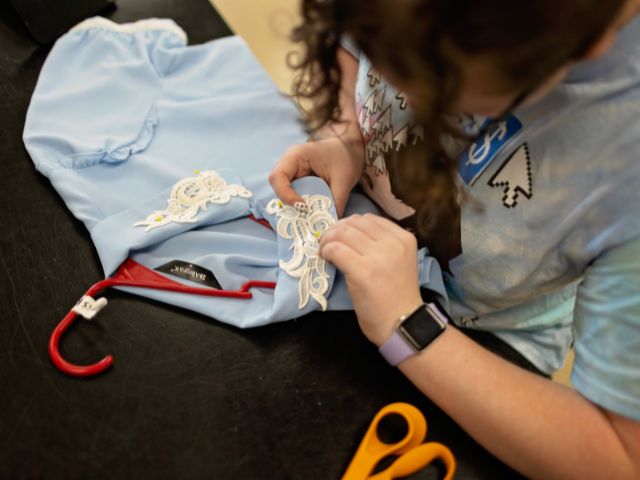
Senior costume design student Mallory Hubbard begins telling the story before a single lyric is sung.
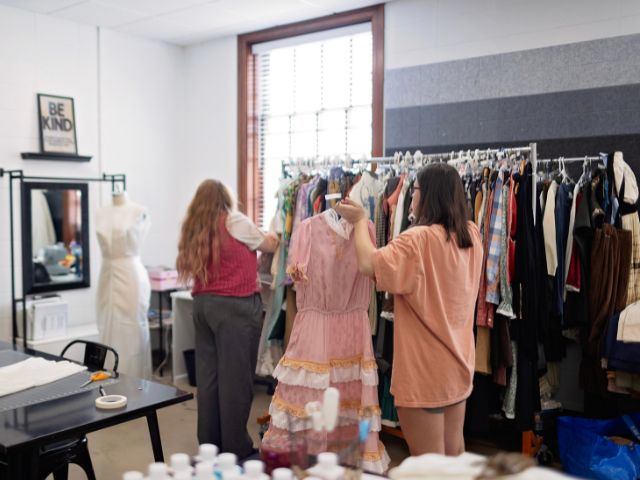 “When we see an actor onstage in costume, we immediately know when and where we are,” Hubbard said.
Her designs reflect the realities of 1906 life—hard work, modest means and a changing nation. Color and detail reveal deeper layers of character.
“Laurey’s purple shows the conflict within her,” Hubbard said, “while Curly’s brighter palette reflects a classic image of the American working man.”
The contrast between Curly and Jud Fry underscores one of the show’s central truths.
“Both are flawed,” Hubbard said. “Both are human. And that’s important to American identity.”
An Ongoing American Story
At every level—performance, design and direction—this production of Oklahoma! reflects the unity that made the musical revolutionary.
“It’s always new,” Castle said. “The story is old, but the actors are young and bring their own stories with them.”
As opening night approaches, lights are focused, sound cues refined and performers rehearse nightly. Together, they are not simply staging a classic—they are participating in an unfolding American narrative that still asks, “Who are we, and how do we belong together?”
Castle hopes audiences feel that invitation.
“That they’re part of something ongoing,” he said. “The ongoing story of discovering what it means to be America.”
