


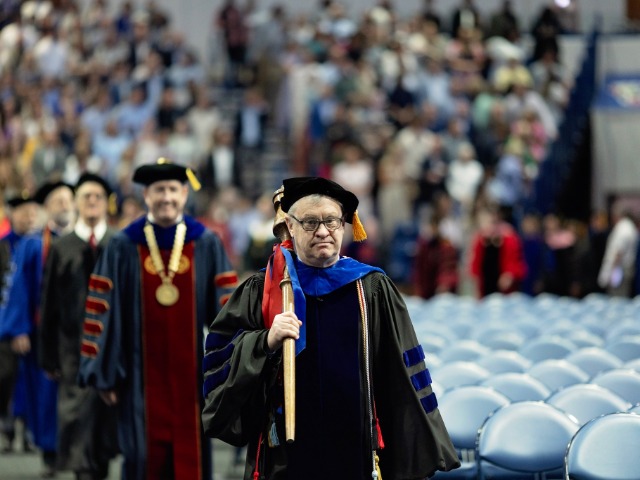
Don Sandley remembers standing on the Harrison Theatre stage nearly three decades ago, following a job interview with then-dean Rod Davis.
“I called my wife and told her Samford felt like the place I wanted to make a home for the rest of my career,” Sandley said.
Now retired from Samford University after nearly 30 years, Sandley marks that moment as the quiet beginning to a tenure that helped define theatre and dance programs within the School of the Arts.
Working as a director, actor, playwright and professor, Sandley helped build Samford Theatre and Dance into a program defined by artistic excellence and an uncommon culture of compassion—one that continues to shape students long after curtain call.
From the beginning, Sandley envisioned more than strong productions or competitive graduates. He wanted to build artists whose skill was paired with something he believed mattered even more: a community marked by genuine care.
“I felt like that could be our Christian distinctive,” he said. Before every performance, Sandley tells his cast the same words: “Play the play with love.”
That rehearsal-room mantra became a guiding philosophy that shaped how theatre was made, how students were mentored and how stories were told.
Sandley set the tone early. His first production, Kindertransport, explored the experiences of Holocaust survivors. Rather than holding a traditional final dress rehearsal, Sandley made a different choice. The cast spent that night with survivors—listening, holding hands, crying and leaving changed.
“That set our course from the very first show,” he said.
Ambition soon followed. Sandley’s first production in the Leslie S. Wright Fine Arts Center was Guys and Dolls. It required powerful vocalists, skilled dancers and a large cast. With scenic design and costumes by former professors Eric Olson Barbara Sloan, the production proved the School of the Arts could take on work of significant scale successfully.
“There was something so inspiring about being able to pull that off,” Sandley said.
Over the years, productions continued to mark meaningful points in the program’s growth. Steel Magnolias saw former provost Brad Creed tell students about his experiences with the playwright’s family. Three Sisters, co-directed with Jason Barnes of London’s Royal National Theatre, brought international collaboration to campus. Shakespeare’s The Tempest, which Sandley directed last spring, felt deeply personal.
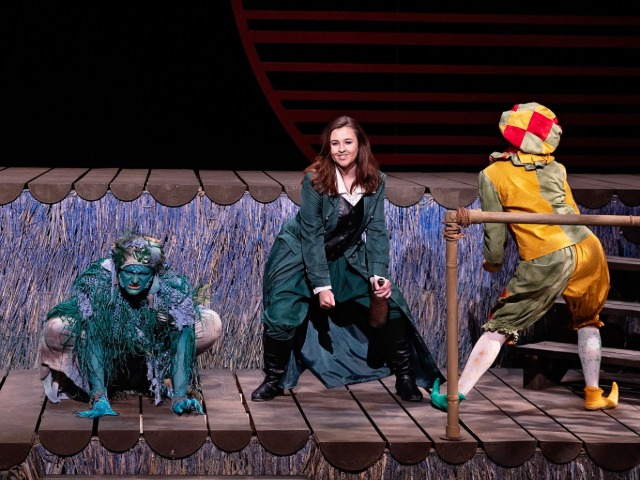 “I knew I would be announcing my retirement soon,” he said. “The cast was everything I had dreamed Samford theatre and dance could be, and I knew my life’s work was all I had prayed for.”
Transformation often happened on stage and behind the scenes. Sandley calls theatre “an all-consuming life” that asks students to build together in scene shops, lighting labs, costume rooms and classrooms. Hewatched students grow and be shaped by the world’s challenges.
“I’ve worked with students shaped by post-9/11, COVID, financial crises and more,” Sandley said. “The world impacts our students. Theatre allows us to help them turn fear, challenge and obstacles into art.”
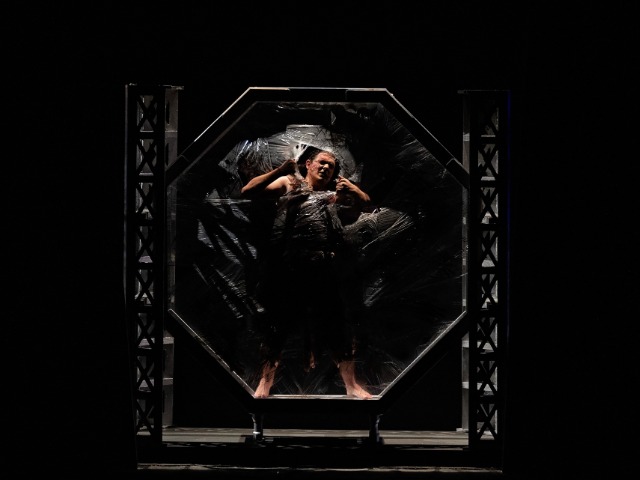 Sandley’s body of work reflects ethical and spiritual themes. From Kindertransport and Frankenstein to Children of Eden and The Tempest, he consistently returned to questions of humanity, forgiveness andgrace.
“I love Children of Eden because it explores God’s love and grace,” he said. “The Tempest has become my favorite play because it shows we must experience forgiveness and share forgiveness if we are ever to find love.”
Early collaborations with faculty like Olson and Sloan set up a creative foundation rooted in trust and possibility. Partnerships with artists like professor and department chair Mark Castle, associate professor David Glenn and assistant professor Mary Gurney deepened the program’s professional strength.
During Sandley’s tenure, including 20 years as department chair, Theatre and Dance grew from a small program into a department of more than 100 students. Under his leadership, the Bachelor of Arts in Theatre expanded, adding new majors in musical theatre, theatre for youth and dance.
He also guided the department through a pivotal institutional transition—moving from Howard College to join with music in the newly formed School of Performing Arts, which later became the School of the Arts. Along the way, Sandley hired much of the department’s current faculty, shaping a collaborative culture that remains central to the program.
Caring remains the program’s defining value, and Sandley points to two traditions as emblematic. Prospective students aren’t rushed through auditions—they’re welcomed, known and invited into relationship. Incoming freshmen are paired with upperclass mentors, forming a generational web of care that often stretches into professional life.
“It’s a thrill to discover your great-great ‘big’ is on Broadway or in a national tour,” he said. “But more than that, it reinforces genuine care.”
As a mentor, Sandley never limited students to a single role in theatre. He tells the story of a disappointed student who, after not being cast for the role she wanted, simply said she loved theatre enough to “pick rice out of the carpet” if that’s what was asked of her.
Sandley taught courses across nearly every area of the discipline, from introductory theatre and acting to playwriting, directing, theatre history and study abroad programs in London and Sydney. His office became a gathering place centered around long conversations about theatre, music and the arts, frequently accompanied by chocolate.
“He develops strong relationships that last for decades,” Castle said. “Alumni regularly return to let him know what they’re doing in the field and to bring their families back to the place they still call home.”
Those relationships are reflected in the breadth of alumni outcomes. Sandley’s students have gone on to work locally in Birmingham, in regional repertory theatres, theme parks, cruise ships, on Broadway, innetwork television and major feature films. Many became educators themselves.
Sandley hopes students measure their success not by fame or recognition, but by impact.
“I want them asking how their work is making the world better,” he said.
For future audiences, his hope is that they leave the theatre having known “laughter, tears, terror, joy—and most of all, love.”
Now that Sandley has stepped away from the rehearsal room, he trusts what remains.
“This program was built on caring,” he said. “Caring about the work, the message and each other.”
The legacy endures, from generation to generation, from stage to seat, still playing the play with love.
